
San Francisco mayor will not attend Levada’s installation in Rome
San Francisco, Calif., Mar 16, 2006 (CNA) - The
San Francisco delegation to Archbishop William Levada’s elevation to
the College of Cardinals in Rome will have one less member. San
Francisco mayor Gavin Newsom announced that he would not attend, after
the Vatican reiterated its opposition to gay adoptions last week,
reported the San Francisco Sentinel.
The Vatican had
stated its opposition to gay adoptions in 2003 and Archbishop Levada,
prefect for the Congregation for the Doctrine of the Faith, reiterated
this position last week. The archbishop had served the Archdiocese of
San Francisco for 10 years.
Newsom expressed
his concerned about what this recent reiteration of the Vatican’s
position says to children who were placed with same-sex couples by San
Francisco Catholic Charities.
In the last
decade, San Francisco Catholic Charities has placed a few children with
same-sex couples in rare and carefully considered cases. But a recent
statement from Archbishop Levada indicated that no Catholic
organization should place children with same-sex couples under any
circumstances from now on.
“If we're
supposed to be encouraging adoption, if we're supposed to be
discouraging abortion which is principled — I absolutely believe that —
then we also have to be encouraging placement in loving households,”
added the mayor, a practicing Roman Catholic. Newsom suggested the
Vatican should evolve in its position on this issue.
Police
Commissioner Joe Alioto Veronese will lead the delegation to the March
24 ceremony in Rome. The archbishop will be formally installed as
Prefect of the Congregation for the Doctrine of the Faith, a position
which he took in August.
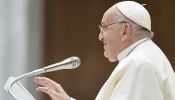
Christian, Jew and Muslim, all believers in one God, must cooperate for good of humanity, says Pope
Vatican City, Mar 16, 2006 (CNA) -
Earlier today at the Vatican, Pope Benedict XVI issued a
powerful call for the world’s monotheistic religions to work
together--through dialogue and mutual respect--for the sake of the
common good of humanity.
The
Pope’s words came during a meeting with delegates from the American
Jewish Committee, with whom he urged increased efforts for “friendship
between the Jewish people and the Catholic Church."
The
Pope also recalled the recent 40th anniversary celebrations for the
Vatican Council II Declaration "Nostra Aetate," pointing out that it
"increased our shared desire to know each other better and to develop a
dialogue characterized by mutual respect and love."
"Jews
and Christian”, Benedict said, “have a rich common patrimony…In
many ways this distinguishes our relationship as unique among the
religions ofthe world. The Church can never forget that chosen people
with whom God entered into a holy covenant.”
He
stressed that "Judaism, Christianity and Islam believe in the one God,
Creator of heaven and earth. It follows, therefore, that all three
monotheistic religions are called to cooperate with one another for the
common good of humanity, serving the cause of justice and peace in the
world.”
“This”,
the Holy Father said, “is especially important today when particular
attention must be given to teaching respect for God, for religions and
their symbols, and for holy sites and places of worship."
Concluding
his brief address, Pope Benedict said that "religious leaders have a
responsibility to work for reconciliation through genuine dialogue and
acts of human solidarity.”
“I
pray”, he told the group, “that your visit today may confirm you in you
rendeavors to build bridges of understanding across all barriers."
Pope praises Ukrainian-Catholic Church for upholding Sacred Tradition, communion with Seat of Peter
Vatican City, Mar 16, 2006 (CNA) - Today,
the Vatican released a letter sent by Pope Benedict XVI to Cardinal
Lubomyr Husar, major Archbishop of Lviv of the Ukrainians, recalling
the forced fusion of Catholics into the Orthodox Church by the
communist Soviet government in 1946.
The Pope’s
message served to mark what he called "the sad events to which the
cathedral of St. George at Leopoli was witness, in March of sixty years
ago."
In the letter,
which was dated February 22nd, the Feast of the Chair of St. Peter, the
Holy Father recalled the infamous March 1946 date, during which "a
group of prelates meeting in a pseudo-synod which took upon itself the
right to represent the Church, made a serious attack against ecclesial
unity.”
“Violence
against those who remained faithful to the Bishop of Rome intensified,”
he wrote, “giving rise to further suffering and forcing the Church to
descend once again to the catacombs."
Despite this,
the Pope expressed his thanks to God that "the Greek-Catholic Church
did not disappear but continued to bear her own witness to the unity,
sanctity catholicity and apostolicity of the Church of Christ."
The pontiff
expressed hope that the anniversary would stimulate the Greek-Catholic
community in Ukraine "to strengthen its intimate and committed bond
with Peter's Successor."
He likewise
emphasized how, "in the patient daily journey of faith, in communion
with the successors of the Apostles, ... the Ukrainian Catholic
community has managed to uphold Sacred Tradition in its integrity."
"In order”, the
Pope went on, “for this precious heritage of 'Paradosis' (or Tradition)
to survive in all its richness, it is important to guarantee the
presence of the two great currents of the one Tradition - the Latin
current and the Orthodox current.”
Each, he said, contains “the multiplicity of historical characteristics that the Ukraine has been able to express."
Benedict closed
the letter by calling to mind what he called "the dual mission
entrusted to the Greek-Catholic Church in full communion with Peter.”
“On the one
hand,” he wrote, “her task is to ensure the oriental tradition remains
visible in the Catholic Church, on the other, to favor the encounter of
the traditions, bearing witness not only to their compatibility, but
also to their profound unity in diversity."
Illinois Catholic citizens group calls for homosexual activist who called Cardinal ‘bigot’ to be removed from anti-hate commission
Chicago, Ill., Mar 16, 2006 (CNA) - The
group, Catholic Citizens of Illinois, are calling on Governor Rod
Blagojevich to remove homosexual activist Rick Garcia from the
Governor’s Commission Against Discrimination and Hate Crimes because of
what they see as his own hate-filled agenda.
Garcia recently
called Chicago’s Francis Cardinal George a “bigot” for his, and the
Catholic Church’s stance against homosexual marriage and the practice
of homosexuality.
Mary Anne
Hacket, president of Catholic Citizens of Illinois, said that “We are
offended by Garcia’s frequent attacks on the Catholic Church and all
Christians for their belief in biblical values.”
She added the
group’s disdain for “his attacks on the Illinois Family Institute which
has been effective in the defense of marriage and efforts to place a
referendum on the ballot to define marriage in Illinois as a union
between one man and one woman.”
“The type of
hatred Rich Garcia spouts on a regular basis”, Hacket charged, “has no
place on a commission financed by the taxpayers and he must be removed
from the Commission at once.”
Catholic group puts faith element back into St. Patrick’s Day Parade
Raleigh, N.C., Mar 16, 2006 (CNA) - Their
mission was to spread the Gospel, not just wear the green. A Catholic
lay apostolate participated in their local St. Patrick’s Day Parade
with the aim of putting faith back into what has become a largely
cultural event.
One Bread Lay
Apostolate organized a group of Catholics from various parishes in the
Diocese of Raleigh to march in the local downtown parade March 11.
They distributed
St. Patrick holy cards among the 20,000 spectators. The cards included
an invitation to attend mass at a Catholic church nearby and to receive
free information about the Catholic Church.
"Many people are
not knowledgeable about Church history," said One Bread member Karen
Matthews. "They think St Patrick’s Day is about shamrocks and
leprechauns. We want to bring back the spiritual aspect of the holiday
and use the parade as a teaching moment to tell the world about one of
the world’s great evangelists."
Matthews said
the spectators seemed glad to receive the holy cards and to learn more
about the man who converted the Irish people in the 4th century from
paganism to Christianity.
This was the
third year the group has marched in the parade, but the first year that
it invited Catholic youth groups to compete for the Catholic Youth
Evangelization Award. St. Luke’s the Evangelist Catholic Church in
Raleigh won the trophy for their cheer.
After the
parade, One Bread offered free information about the Church at their
booth in Moore Square, where they also sold food, soft drinks, Catholic
books and gifts.
Polish priests fill need for ministers in European countries
London, England, Mar 16, 2006 (CNA) - Due
to the shortage of British clergy, dozens of priests from Poland arrive
in the United Kingdom each month to take charge of parishes and
minister to the growing number of Polish migrant workers, reported The
Guardian. While some are long-term assignments, some priests just fly
in for the weekend to celebrate mass.
But Polish
priests aren’t just going to Britain. In recent months, more than 62
priests from the Archdiocese of Krakow left for assignments around the
world, including Austria, Brazil, Ireland, Germany, Tanzania, Ukraine,
and the United States.
Poland seems to
be the only nation in Europe where the number of vocations is rising,
accounting for one-quarter of all European applications to the
seminary, reported The Guardian. Currently, Poland has 29,089 ordained
priests, about 1,845 monks and 23,105 nuns.
Krakow's
seminary alone currently has 240 students. The number of Poles applying
to join the priesthood increased, from 4,500 in 1998 to 7,100 in 2005.
Some explain the high numbers with the Church's role in the struggle
against communism and the extraordinary influence of Pope John Paul II.
In contrast, in
2003, there were a total of 110 seminarians in all of Ireland and a
total of 27 seminarians in England and Wales. This trend of decline
repeats itself in other European countries.
In France,
seminaries accepted 927 applicants in 2001, compared with 1,210 in
1991. There were no applications to join the priesthood in the
French-speaking part of Switzerland in 2002.
Carmelite who died at 26 to be beatified Saturday
Rome, Italy, Mar 16, 2006 (CNA) - The
Vatican’s Office of Liturgical Celebrations announced this week that on
Saturday, March 18th, the Servant of God, Elia di San Clemente, a
Carmelite nun who died in 1927 at the age of 26, will be beatified at
the Cathedral of Bari in the Italian region of Puglia.
Elia de San
Clemente, whose given name was Teodora Fracasso, was born in Bari on
January 17, 1901, and was called “the little smile of God” by the
bishop of the time.
Teodora lived
with her family until she was 19, when she entered the Discalced
Carmelite Monastery of St. Joseph in her native city on April 8,
1920. She made her final profession on February 11, 1925 and
towards the end of 1926 she began to suffer a continuous headache,
which she referred to as “my little brother.”
In a letter
written to her spiritual director, she said: “My little brother won’t
allow me to give long discourses, much less listen to them. As
you see, all this is working together to isolate me from everything so
that I live only in God. Nothing upsets the peace of my
soul. Everything has become a way of drawing myself towards
Him. No, venerable Father, I do not regret having consecrated
myself victim to the Lord.”
The pains were
the beginning of encephalitis, which would culminate in her early, and
unexpected death; the community was only made aware of the gravity of
the situation when she was already in a coma.
On a radiant Christmas morning in 1927, at age 26, Sister Elia went home to God.
Spain's new Cardinal-designate says Church defends man from secularism
Toledo, Spain, Mar 16, 2006 (CNA) - TOLEDO
– In an exclusive interview with the Catholic News Agency, Archbishop
Antonio Cañizares of Toledo, who was recently named cardinal by Pope
Benedict XVI, spoke at length about the challenges of secularism and
the hopes of the Church.
The archbishop
said his appointment to the College of Cardinals was a sign of “support
for the Bishops’ Conference of Spain, that we continue ahead
unfalteringly with the mission we have in this delicate phase our
country is experiencing.”
“We live
immersed in a profound cultural change characterized by a secular plan
imposed on our society, a plan that seeks to eradicate the Christian
roots that form our foundation and a cultural change characterized also
by nihilism, the neo-Marxism, where God doesn’t count and is reduced to
the private sphere. And this doesn’t happen without very serious
consequences for man and for our society,” the cardinal-designate said.
Archbishop
Cañizares denied the government’s claim that the Church is
“inappropriately interfering” in public life. “Is it interference
to defend fundamental human rights such as the right to life, to defend
the human being from the first moment of conception, to protect him
against manipulation and destruction?” he asked.
“Is it
interference to defend the truth about marriage, which consists solely
of the stable union between a man and a woman through love that is open
to life? Is it interference to protect marriage and the family
from ‘quick’ divorce? Is it interference to defend freedom of
education and that parents see their right respected to have their
children educated or to receive a moral and religious education that is
in accord with their moral and religious convictions?”
“The Spanish
bishops,” he continued, “have the duty to do what we are doing.
If not, we would not be good bishops who defend the truth about the
human being.”
“What I am
demanding is that, for the good of Spain, of our society and of our
people, those fundamental principles and rights be respected, that the
ethical foundation of our society be sustained and respected, that we
not fall into an ethical relativism which will bring down
democracy. Because when we defend moral principles, the human
person and his dignity, greatness and freedom, the right to a moral and
religious formation, etc, we are defending democracy. If we
don’t, then the future of democracy in Spain and in other countries is
seriously at risk,” he said.
The
cardinal-designate praised the laity for their peaceful protests
demanding respect for marriage, the family and human dignity, saying
such manifestations prove that “this is not about being against
anybody, but rather that Christians want to be heard because we are
convinced that faith in Jesus Christ is valid for all and is a richness
that mankind needs today.”
“Therefore,
despite everything, I believe this is a very hopeful moment, a sign of
a new springtime in the Church,” he said in conclusion.
Brazilian official says country not ready for abortion
, Mar 16, 2006 (CNA) - Brazil’s
Secretary for Women’s Policies, Nilceia Freire, admitted this week that
political conditions in the country were not favorable for the passage
of a controversial new law that would legalize abortion on-demand.
Freire said that
the current election year in Brazil does not appear to be an
appropriate time to pass the law, which was brought before the
Brazilian senate and then later withdrawn. Passage of the law had
been a priority for Freire and the Brazilian government.
“Politicians who
want to be reelected are not going to take a risk by voting for a bill
that is not popular,” Freire said. Polls show that 92% of
Brazilians oppose legalizing abortion.
Freire said she
hoped to bring up the issue again during the next legislative session,
under what she called “better conditions.”
Campaign initiated to establish ‘Terri’s Day’
Detroit, Mich., Mar 16, 2006 (CNA) - An
initiative has been launched to establish March 31 as Terri’s Day, an
annual national day of remembrance to honor the memory of Terri
Schiavo.
The initiative
was announced by Schiavo’s father, Bob Schindler, and Kevin Fobbs,
president of the National Urban Policy Action Council.
“Terri Schiavo’s
legacy has taught us that life is precious and should be protected,”
said Fobbs. “We are asking Americans to take a moment of their time to
honor Terri’s memory as well as what former Pope John Paul II called
the Culture of Life.”
Organizers are
seeking up to one million pledges from around the United States and the
world in support of establishing this day of remembrance.
The organizers
are also asking supporters to pledge that they will obtain a living
will, to encourage state officials to establish March 31 as Terri’s
Day, to encourage the media to embrace stories that promote the Culture
of Life, to support the creation of professional volunteer networks to
assist families dealing with disability and neurological issues, and to
support the Terri Schindler Schiavo Foundation in establishing a
neurological health care facility.
The pledge drive
will culminate May 12 in Southfield, Mich., with an official ceremony,
prayer vigil, and the presentation of a ceremonial pledge sheet to
Schiavo’s family and a check of donations.
Catholic Charities and World Cup 2006; buying sex is a not a sport!
Berlin, Germany, Mar 16, 2006 (CNA) - Catholic
Charities and Caritas of Germany have expressed a heartfelt “no” to
female prostitution during the World cup soccer tournament which is
being held there next summer. They are calling for petition signatures
protesting what they call a form of “slavery.”
In 2002, Germany
officially legalized the prostitution industry, and now, with one of
the largest sports competitions in the world coming to that country,
women are being brought in from Eastern Europe for this purpose, says
Germany’s Catholic Charities and Caritas organizations.
From June 9th,
to July 9th, more than 3 million visitors are expected to attend the
World Cup games. Catholic Charities has signed a petition against this
form of exploitation and the new sex industry stressing that sex cannot
be acquired at any price; that the human body is not a commodity that
can be traded.
Prostitution, they said, is contrary to international standards, promotion of equality, respect and non-discrimination.
Belief in God and superstition incompatible, says Mexican bishop
Mexico City, Mexico, Mar 16, 2006 (CNA) - Bishop
Pedro Pablo Elizondo Cardenas of Cancun-Chetumal, Mexico, warned
Mexicans this week against believing in superstition, which, he said,
the world proposes as an answer to personal problems. He said that the
only answer to trials and tribulations is in attentiveness to the word
of God.
The bishop
lamented the loss of faith and the spread of pagan rites and
superstition, such as fortune telling and tarot cards, which are
rejected by God.
He warned
parents not to let their children to become involved in witchcraft,
sorcery, magic, astrology or séances, “because all these things are an
abomination to your God.” Such practices, he said, were common
among pagans, “but we know that Christ is the only one who came to
bring to the truth.”