
San Francisco city supervisors slam Vatican position on gay adoptions
San Francisco, Calif., Mar 23, 2006 (CNA) - The
City of San Francisco’s Board of Supervisors issued a statement
Tuesday, calling on the Vatican to change its directive against gay
adoptions and urging the new archbishop of San Francisco, Archbishop
George Niederauer, to defy the Vatican.
"It is an insult
to all San Franciscans when a foreign country, like the Vatican,
meddles with and attempts to negatively influence this great city's
existing and established customs and traditions, such as the right of
same-sex couples to adopt and care for children in need,” stated the
nonbonding resolution, which was passed unanimously.
The Archdiocese
of San Francisco has indicated that it will comply with the Vatican,
but Catholic Charities of San Francisco’s executive director said
Tuesday that the agency’s policies and procedures have not changed,
reported the San Francisco Chronicle. Since 2000, the agency has placed
only five children with same-sex couples.
In their
resolution, the city’s elected officials called a 2003 Vatican document
that addressed same-sex unions and gay adoptions "hateful and
discriminatory rhetoric (that) is both insulting and callous, and shows
a level of insensitivity and ignorance which has seldom been
encountered by this Board of Supervisors,” reported the Chronicle.
The supervisors
called Archbishop William Levada, the prefect of the Congregation for
the Doctrine of the Faith, who reminded Catholics last week of the
Vatican’s position against gay adoptions, a decidedly unqualified
representative of his former home city and of the people of San
Francisco and the values they hold dear.”
Supervisor Tom
Ammiano, a gay Catholic, parent and grandparent who wrote the
resolution, told the Chronicle that he believes Catholic Charities
appears to be trying to find a creative solution to the situation.
At the same
time, some fear a conflict of interests as Catholic Charities
newly-hired director of programs is an openly gay man who has an
adopted child together with his partner.
City Supervisor
Sean Elsbernd, a married Catholic, said he believes the Church “made a
mistake” in its position and voting for the resolution was the right
thing to do.
Pope Benedict, Cardinals discuss lifting excommunications on Lefebvrists, free use of Latin missal
Vatican City, Mar 23, 2006 (CNA) - As
the Pope met today with members of the College of Cardinals, who are in
Rome for tomorrow’s Consistory where 15 new cardinals will be added to
their ranks, the subjects of the schismatic Saint Pius X Society as
well as the use of the Latin missal and retirement age for bishops
largely held the floor.
According to
CNA’s sources in the Vatican one of today’s main topics of conversation
surrounded the possibility of lifting the excommunication on Archbishop
Marcel Lefebvre and the four bishops ordained by him before his death.
Their group, the Saint Puis X Society broke away from the Church
following the Second Vatican Council.
In addition, the
Pope and the Cardinals discussed whether or not they may declare a full
amnesty for the free use of Pope V's Latin missal; and how to do
so without betraying the spirit of the Vatican II Council.
The second major topic of conversation surrounded the retirement age for bishops.
Given that life
expectancy and quality of life have improved since the original age of
75 was put in place, some cardinals have suggested the possibility of
postponing the legal age of retirement to 80.
150 of the
193-member College of Cardinals were in attendance today for a day of
prayer and reflection called for by Pope Benedict ahead of the Ordinary
Public Consistory--including the 15 which will be incorporated
tomorrow. The Vatican said that today’s meetings followed the general
format of discussions used prior to last year’s papal conclave.
The official languages of today’s meetings have been English, Italian, French and Spanish.
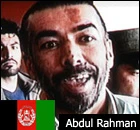
Pressure mounts on Afghanistan to release Christian convert
Washington D.C., Mar 23, 2006 (CNA) - An
increasing number of groups and governments are calling on Afghanistan
to honor the universal human right to religious practice and to release
Abdul Rahman, who is being tried in an Afghan court for having
converted to Christianity from Islam.
Rahman, 41,
faces a possible death penalty for converting to Christianity 16 years
ago. He has been charged with rejecting Islam, which is considered a
crime under the country's Islamic laws. Rahman is expected to undergo a
psychological examination. The trial will be dropped if he is found
mentally unfit.
President George
Bush said Wednesday he is “deeply troubled … that a person who
converted away from Islam may be held to account.”
"We expect them
[Afghanistan government] to honor the universal principle of freedom,"
Bush reportedly said, having requested the man’s release one day
earlier. "I look forward to working with the government of that country
to make sure that people are protected in their capacity to worship."
The Embassy of
Afghanistan in the U.S. said it has received a significant number of
inquiries about Rahman’s case and greatly appreciates the public
concern.
“The Government
of Afghanistan is fully aware of and pursuing the best ways to resolve
Mr. Rahman’s case judicially,” said an embassy statement, released
yesterday. “It is too early to draw any conclusion about the
punishment, and we appreciate public understanding of the sensitivity
of religious issues.
“The
Constitution of Afghanistan provides protection for freedom of
religion,” the embassy statement underlined. “The Government of
Afghanistan will ensure that the constitutional rights of its citizens,
international principles, and the due judicial process are respected
and implemented.”
These
assurances, however, have not abated the calls for Rahman’s release
from religious and human rights groups. “Abdul Rahman, along with every
other Afghan citizen, deserves freedom of religion,” said Concerned
Women of America president Wendy Wright.
Wright argued
that the ruling in this case would set a precedent for what will follow
in the budding democracy of Afghanistan. “We call on Afghanistan to
spare this man’s life and ensure all Afghans can enjoy religious
liberty,” she said. She also commended Rahman for his religious
conviction in the face of adversity, calling him “an example to us
all.”
In a letter to
President Bush, Christian Freedom International also called for
Rahman’s immediate release and indicated that his “is not an isolated
incident.”
“The persecution
of Christians is an increasing, unintended consequence of the War on
Terror,” said Christian Freedom International president Jim Jacobson.
Rahman’s case is
just “the tip of the iceberg,” said Jacobson. “There are thousands of
other persecuted Christians in Islamic nations just like him. Becoming
a Christian should not be considered a crime in Afghanistan or
elsewhere.”
The Council on
American-Islamic Relations, a Muslim civil liberties advocacy group
based in Washington, also urged Afghanistan to release Rahman.
An editorial
today in the New York Times called Afghanistan’s move to try and
declare Rahman “mentally unfit” a “cheap trick” which would merely
avoid the international mess and keep the Islamic law on the books
indefinately.
College of Cardinals gather in Rome for Consistory, vow to assist Pope Benedict in mission of Church
Vatican City, Mar 23, 2006 (CNA) - Members
of the College of Cardinals have gathered in the Vatican in advance of
Friday’s Ordinary Public Consistory in which Pope Benedict XVI will
create the first new cardinals of his pontificate.
Today, the Holy
See hosted a day of prayer and reflection--called for by the Pope
himself--during which the Cardinals asked the Holy Father how they
could assist him in his mission as shepherd of the Church.
As the meeting
commenced in the Vatican‘s Synod Hall, Cardinal Angelo Sodano, who is
dean of the College of Cardinals, thanked the Holy Father on behalf of
all those present for having called them to this day of prayer. He
called it an encouragement "to joint action more in keeping with the
pastoral challenges of the present time".
He stressed that today’s meeting "shows the importance Your Holiness attributes to the College of Cardinals.”
“For our part,” he said in response, “we undertake to abide by the mission the Church expects from us".
Addressing the
entire gathered body, Cardinal Sodano reflected that the cardinals help
in the mission of the Pope "both when gathered collegially, and when
acting individually within the Roman Curia".
In this light,
he highlighted what he called the “complementarity” between the two
consultative bodies which the Church places at the disposal of the
Pontiff. Namely, these are the Synod, created after Vatican Council II,
and the College of Cardinals itself.
The cardinal
concluded by asking Pope Benedict to inform the College “of the themes
upon which you wish to hear our opinion and to take counsel.”
“As dean,” he
said, “it is also my honor to extend to you the devoted greetings of
all members of the College of Cardinals who are absent because of
urgent appointments or through reasons of health - such as Cardinal
Bernardin Gantin, dean emeritus - and who are present in spirit".
The Vatican said
that during today’s meeting, there will be free discussions among the
participants, following a format similar to the Cardinal’s gathering
last year prior to the papal conclave. Those were led by Cardinal
Joseph Ratzinger, now Pope Benedict.
15 men from around the world will become Cardinals tomorrow including 2 from the U.S.
Doctor says disabled newborns are killed in North Korea
Seoul, South Korea, Mar 23, 2006 (CNA) - North
Korea has no people with physical disabilities because they are killed
soon after they are born, according to Dr. Ri Kwang-chol, who fled the
communist country to South Korea last year. He shared his shocking
tales yesterday with a forum of human rights activists in Soeul.
Dr. Kwang-chol
said the practice of killing newborns with disabilities is encouraged
by the state as a way of purifying the masses and eliminating people
who might be considered "different,” reported Reuters.
He told members
of the New Right Union, who were gathered at the forum, that babies
born with physical disabilities were killed in infancy in hospitals or
in homes and were quickly buried, reported Reuters. He said he never
took part in the practice.
The group issued
a statement, urging the South Korean government to stop its “silent
diplomacy” with its northern neighbor and to take immediate action. But
the South Korean government has refused to join international
condemnation of North Korea’s human rights abuses for fear that it
could put off relations with Pyongyang.
Pro-life
activists in the West fear that the prevalence of abortion in the
Western world will eventually lead Western countries down the slippery
slope toward this practice as well.
Strong sales for advanced copies of new Catechism Compendium
Washington D.C., Mar 23, 2006 (CNA) - It
may not make the New York Times Bestsellers’ List, but the U.S.
bishops’ publishing office is expecting the soon-to-be-released
Compendium of the Catechism of the Catholic Church to become a major
publishing success.
With
pre-publications sales at over 40,000, the USCCB is expecting to sell
up to 200,000 copies in the first year. A publishing rule of thumb is
that pre-publication sales amount to one-third of first year sales.
The 200-page
synthesis of the 1992 Catechism, available in English and in Spanish,
will be officially available March 31. It has been available by special
order for the last few weeks.
Pope Benedict
XVI promulgated the Compendium last year, attesting to its faithfulness
to the Catechism. It “contains, in concise form, all the essential and
fundamental elements of the Church’s faith,” he assured.
He expressed
hope that it “may awaken in the Church of the third millennium renewed
zeal for evangelization and education in the faith.”
The Compendium,
which is organized in 598 easy questions and answers, was initiated by
his predecessor, Pope John Paul II, in response to an urgent need
expressed by catechetical experts worldwide.
Paperback copies cost $14.95; hardcover books cost $24.95.
To order, go to www.usccbpublishing.org.
Expert warns of new strategy to promote abortion in Latin America
Lima, Peru, Mar 23, 2006 (CNA) - The
recent case of Paulina Ramirez, a rape victim who was used by the
US-based “Center for Reproductive Rights (CFR)” and its partners to
force the Mexican state of Baja California to approve abortion in cases
of rape, is part of a new strategy to force Latin America to accept
abortion, according to Carlos Polo, director for Latin America of the
Population Research Institute.
Speaking with
CNA, Polo said the new strategy, which consists of using non-binding
international agreements to surprise countries, “is explained in an
essay entitled, ‘What role does international law play in the promotion
and advancing of reproductive rights in Latin America?” written by
Monica Roa—the Colombian lawyer seeking the legalization of abortion in
that country—Lilian Sepulveda-Oliva and Luisa Cabal. All three
are members of the CFR.
In their essay,
the writers propose using international litigation to “develop new
standards for the protection of reproductive rights” and to force local
authorities to ignore the country’s laws and introduce changes that
would allow abortion and “reproductive health” services for teenagers.
The three women
acknowledge that these situations are “still without a solid legal
framework that reflects an obligation to exercise reproductive rights.”
Polo said this strategy has already been used in three cases—two in Peru and the most recent in Mexico—by the CFR.
The case in
Mexico was that of Paulina Ramirez, who was a victim of rape. In
Peru, the case being used is that of Karen Llantoy, who is mother of an
anencephalic child and whose lawyers argue that it is a case of
“therapeutic” abortion because abortion is not penalized in cases of
life or health of the mother. The other case in Peru is that of
Mamerita Mestanza, who died after a forced sterilization and lack of
medical attention.
Polo notes that
there are common elements in all three cases: “An ideologically based
reinterpretation of international pacts and treaties and an
over-exaggeration of the role of the follow-up committees for these
treaties.” “It must be remembered that the recommendations of
these committees are non-binding, that is, they do not compel a
country; and yet the strategy of the CFR is, with the support of other
human rights organizations, to intimidate countries and to make them
think that they are not fulfilling binding international agreements,”
Polo added.
“In this way,
when a state acquiesces to the pressure, it establishes a series of
‘agreements’ that mean acceptance of the practice of abortion, and it
establishes precedent for future cases,” Polo continued.
In the case of
Paulina Ramirez in Mexico, the CFR and its allies sued the Mexican
state of Baja California “for preventing her access to abortion since,
according to the plaintiffs, the birth of the child—who ironically is
being lovingly today raised by Paulina—violated her sexual integrity.”
The state of
Baja California finally agreed to pay reparations to Paulina and said
it would not allow “cases like Paulina to happen again in the state.”
Pro-life groups
are working to determine what the state of Baja California has
committed to and whether it would be in violation of Mexican law, which
does not recognize the “right” to abortion in cases of rape. “The
strategy consists in insisting that this is about ‘the violation of the
mother’s human rights’ without mentioning the rights of the child,”
Polo explained.
According to
Polo, “CFR has no interest in understanding or respecting the legal
framework that protects life as a tradition and as a conviction.
What we have here is a subversion of the legal order cooked up and
planned in an office in New York,” he added.
Polo said if
anti-life groups were truly concerned about maternal mortality, “they
would focus their efforts on the main cause, which is poorly-attended
births, which account for more than three-fourths of maternal deaths in
Latin America. It’s their ideological objectives that make them
focus on abortion, which is the cause of only six percent of such
deaths.”
German Church announces theme for papal visit to Bavaria: “He who believes is never alone”
Munich, Germany, Mar 23, 2006 (CNA) - As
part of the preparations for the Pope’s upcoming visit to Bavaria in
September, the bishops of the three dioceses that will host the Holy
Father have announced the official theme of the visit through a poster
campaign: “He who believes is never alone.”
The Kath.net
news agency reported that during the traditional conference marking the
beginning of the new season in Freising, the Archbishop of Munich,
Cardinal Friedrich Wetter, Bishop Wilhelm Schraml of Passau and Bishop
Gerhard Ludwig Müller of Ratisbona presented the official picture and
theme for the Pope’s visit to their respective dioceses.
The poster features a picture of the Pontiff over a blue background with the theme of the visit printed at the bottom.
The picture will
be displayed in the different dioceses of Germany, as well as in
Austria, the Czech Republic, Slovakia and Hungary, inviting the
faithful to travel to Bavaria for the historic visit.
Archbishop says Chavez employing Messianism to distract Venezuelans
Caracas, Venezuela, Mar 23, 2006 (CNA) - Archbishop
Jose Baltazar Porras of Merida, Venezuela, said this week that
President Hugo Chavez is employing Messianism and creating conflicts
with other countries in order to get Venezuelans to forget about “their
painful reality, which consists of growing poverty, insecurity and
unemployment.”
The archbishop
says Chavez uses religious language in his speeches in attempt to link
Christianity to Socialism. Thus people end up believing Socialism
is Christianity “incarnate.” He said this was a propaganda tool
Chavez is using “to get the people on his side.”
Archbishop
Porras said the Venezuelan president “gives people so-called answers in
order to distract them from real problems.” He also said the
Church in Venezuela is being persecuted for rejecting the government’s
policies.
Opus Dei launches new website in 22 languages
Madrid, Spain, Mar 23, 2006 (CNA) - The
Catholic apostolate, Opus Dei has recently launched a new website in 22
languages offering a variety of information about the Prelature
together with news about the Pope’s activities and current events in
the Church.
The new website
at http://www.opusdei.org provides press releases, audio and video
files and photos from the press offices of Opus Dei located in
different parts of the world.
It also offers
an email subscription, which sends a daily excerpt from the writings of
St. Josemaria Escriva de Balaguer to an estimated 40,000 members.
During 2005, Opus Dei’s old website was visited by more than three million people.