

Phoenix, Ariz., Mar 14, 2006 / 22:00 pm
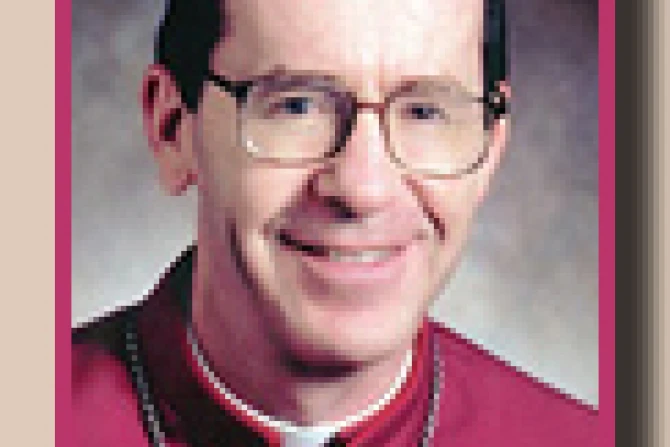
Officials from the Diocese of Phoenix have responded to recent criticism over a local autistic boy who some claim is being denied communion by Bishop Thomas Olmsted.
A March 4th headline in the Arizona Republic newspaper blared that the Church had denied communion to 10-year old Matthew Moran, a charge which the diocese says, is mistaken.
Under the Moran family’s recent practice, Matthew would receive the host on his tongue where it would sit only momentarily before his father would take it out of the boy’s mouth and consume it himself.
Phoenix Bishop Thomas Olmsted said that this practice does not allow the boy to truly “receive” the Body of Christ and that Church teaching is clear on norms for Eucharistic reception. He wrote in a recent letter that Matthew is not prohibited from receiving communion, only that he could "not able to approve the present practice."
Rosalind Gutierrez, who is director of the Diocesan Office of Worship, and Isabella Rice, director of the Office of Disabilities and Pastoral Care Ministries, submitted an editorial piece to the Arizona Republic outlining the situation from the Church’s perspective. It will appear in tomorrow’s edition.
They say that although it has been reported that Matthew cannot receive communion without spitting it out, evidence from the Diocese of Pittsburgh disputes this.
That diocese provided Phoenix officials a statement from the boy’s catechist there which said that “After many practices in the classroom, (Matthew) was able to consume some unconsecrated hosts”, and “did sip the unconsecrated wine.”
Gutierrez and Rice also cited Fr. David Driesch, pastor of St. Bernard Parish in Pittsburgh, who stated, “On the day of his First Holy Communion, I gave Matthew the consecrated host, he received it and consumed it in my presence.”
The Diocese of Phoenix is now asking what happened? The editorial stated that “The documents from the Diocese of Pittsburgh clearly prove that Matthew is able to receive the Eucharist in the manner prescribed by the Church and in the manner in which he received at his First Holy Communion.”
Gutierrez and Rice added that “accordingly, the Diocese of Pittsburgh never endorsed the present practice of just touching the consecrated host to Matthew’s mouth or tongue. Therefore, Bishop Olmsted has never denied the Eucharist to Matthew.”
They said that in fact, it is Bishop Olmsted who “is seeking to return Matthew to the fullness of reception that he previously experienced.”
The prelate, they pointed out, “is asking that Matthew again receive the Eucharist in ways that are consistent with Church teachings and the documents. The reception of the Eucharist is not ‘in the eye of the beholder,’ as some apparently would like us to believe. The reception of the Eucharist is an objective, grace-filled reality at which the consumption of the consecrated host brings the communicant into a oneness with Jesus Christ and His Church.”
“Continuing to deny Matthew the fullness of the grace of the Eucharist”, the letter stressed, “would be unconscionable.”
The diocese says they are determined to work with Matthew and his family because he “deserves to be able to take the Eucharist fully and completely.”
Gutierrez and Rice said that “the decision to receive the Eucharist” is that of the individual. No one can receive on our behalf — it is an act of our free will to approach the Blessed Sacrament,” and explained that “For this reason, Bishop Olmsted continues to commit the resources of the Phoenix Diocese to assist the Moran family.”
“We also trust”, they wrote, “that God is not restrictive in how He blesses people. If Matthew never receives Eucharist in the manner prescribed by the Church, we trust that God will continue to bless Matthew in ways known to Matthew and God alone.”