

|
|
||||||||
|
When there is no cure, relieve suffering by honoring dignity, says Holy Father
![]() Related articles:
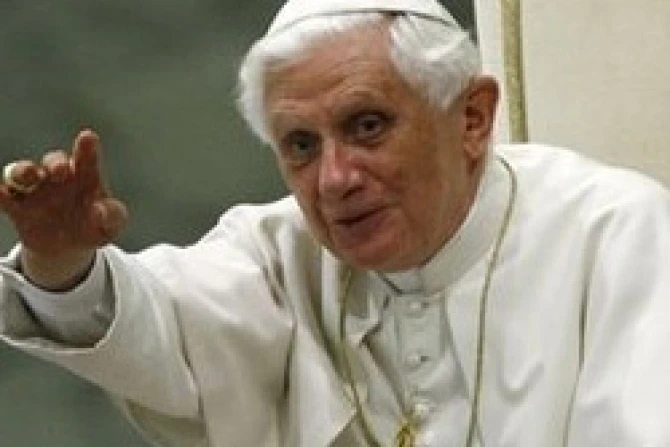
.- At the national congress of the Italian Surgical Society on Monday, the Holy Father reminded participants that the dignity of all patients must always be upheld so they will never feel abandoned. During Pope Benedict’s address to the congress—meeting to discuss the theme: “Towards a Surgery that Respects the Sick”—he remarked how in the past, it was only possible to alleviate the suffering of the sick. However, now, thanks to advances in science and technology, it is possible to cure many of those suffering with illness. When medical personnel are working with a patient who cannot be cured or with whom “appreciable results” cannot be achieved, the Pope warned that these patients should never feel abandoned. Though, they cannot hope for a cure, the “person's suffering can be relieved," because patients "have a dignity which must be honored, and which constitutes the necessary foundation of all medical activity. Respect for human dignity, in fact, requires unconditional respect for each individual human being, born or unborn, healthy or sick, whatever their condition may be." Respecting patient’s human dignity requires doctors to work to discover "the most appropriate means to communicate with each patient,” the Holy Father said. “Such means of communication, while respecting the truth of the facts, will aim to sustain hope, which is an essential element of therapy.” “Patients want to be listened to, not just subjected to sophisticated diagnoses," Benedict XVI explained. "On the one hand, it is undeniable that the will of the patient must be respected,” but it is important to keep in mind that they may have an “unrealistic, and certainly impoverished, reading of human reality. On the other hand, the professional responsibility of doctors must bring them to suggest treatments that aim at the true good of patients, with an awareness that their specific competencies generally make them better capable of evaluating the situation than the patients themselves." Family members also have a responsibility to their sick relatives, Benedict XVI added, saying that the family’s role is an important counterbalance for avoiding “increasing the sense of alienation that a person inevitably suffers if entrusted to a form of medical care that is highly technological but lacks sufficient human sentiment." Subscriber comments:
Published by: Jack
NY 10/20/2008 02:09 PM EST
All people deserve dignity and loving care when incapacitated. All are God's children.
ADD A COMMENT (Your e-mail will NOT be published):
* Thanks for your comments. The number of messages that can be online is limited. Length should not exceed 1500 characters. CNA reserves the right to edit messages for content and tone. Comments and opinions expressed by users do not necessarily reflect the opinions or beliefs of CNA. CNA will not publish comments with abusive language, insults or links to other pages. ADVERTISING |
Latest news:
06:34 pm | Post office rate hike on mailings critical of homosexuals in the military overruled 01:04 pm | Over 1,500 attend Philadelphia men’s conference 11:05 am | Jesus is Justice in person, declares Benedict XVI at Angelus 07:50 am | Knights of Columbus rallying against ‘immoral' Philippines contraception campaign 04:52 am | Church celebrates feast of father of 10 turned hermit Related news :
New project launched to reduce abortion rate for pre-natal Down syndrome diagnoses Sexual orientation laws trump religious freedom, California Supreme Court says Bush administration to implement regulation protecting healthcare providers' consciences Anti-discrimination rule proposed to protect pro-life healthcare workers Get CNA News on your email:
Resources
|
ADVERTISING
Place your ad here |
||||||
|
||||||||

