
San Francisco Archbishop: Gay adoptions conflict with Church teachings, but conflict of interests looms at Catholic Charities
San Francisco, Calif., Mar 22, 2006 (CNA) -
Archbishop
George Niederauer has said placing children with same-sex couples
conflicts with Catholic teaching and has asked his local Catholic
Charities to bring its adoption program fully in line with the Church's
views. However, with the recent hiring of an openly gay adoptive parent
as the organization’s director of programs, many smell a massive
conflict of interests.
According to an Associated Press report, an archdiocesan spokesperson announced the archbishop’s stance yesterday.
“We realize that
there are people in our community, some of whom work side by side with
us to serve the needy in society, who do not share our beliefs, and we
recognize and respect that fact," Archbishop Niederauer said in a
written statement a week ago.
Since 2000, five
of the 136 adoptions facilitated by Catholic Charities of San Francisco
have been to gay couples, according to Brian Cahill, the agency's
executive director. He told the AP Monday that he interpreted the
archbishop's remarks as a guideline, not a ban.
"Catholic
teaching is paramount. Equally paramount are the best interests of the
vulnerable children that we serve," Cahill was quoted as saying.
Ignatius
Insight’s Valerie Schmalz reported yesterday however, that Cahill
recently hired Glenn Motola--an openly gay man who has an adopted son
together with his partner--as Catholic Charities’ director of programs.
Archdiocesan
spokesman Maurice Healy said Catholic Charities might be able to
complete any adoptions by gay couples already in the works, but he was
less sure whether the archbishop’s position offered any leeway.
City supervisors
have threatened to withdraw funding from Catholic Charities if the
archdiocese decides not to place children in same-sex households.
However, Healy said such a move would not force the program, which has
an annual $400,000 budget, to close.
Afghan man facing death for converting to Christianity won’t recant, experts ask, ‘is world body doing enough?’
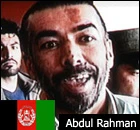
Kabul, Afghanistan, Mar 22, 2006 (CNA) - Abdul
Rahman was reportedly turned into Afghan authorities by his own family
for becoming Christian--an act which could subject him to death
according to that country’s strict Islamic laws.
Speaking in
Washington yesterday, Afghanistan’s Foreign Minister Abdullah Abdullah
said that while his government is largely staying out of the affair, he
hoped that "through our constitutional process there will be a
satisfactory result".
Mollie Zeigler,
a writer for the website GetReligion, wondered today if the world body,
particularly the U.S., was doing enough to see Rahman freed.
Many countries,
she wrote, “seem to be officially condemning the action more than US
officials have thus far. German and Italian officials have condemned
the human rights violation but at press time, the only words from
America’s executive branch came from the third-highest senior official
at the State Department.”
Nicholas Burns,
the diplomat in question said yesterday that “We hope that the Afghan
constitution is going to be upheld and in our view, if it’s upheld,
then of course he’ll be found to be innocent.”
He added that
“While we understand the complexity of a case like this and we
certainly will respect the sovereignty of the Afghan authorities and
the Afghan system, from an American point of view, people should be
free to choose their own religion.”
Many charge that
the U.S.--who recently helped establish a democratic government in
Afghanistan--should, in particular, be offering stronger words of
condemnation. As of press time, President Bush had made no comment on
the case.
“The Bush
administration”, Ziegler said, “may need to bring out a slightly bigger
gun — and slightly more compelling rhetoric — if it wants to help
Rahman. But why hasn’t Bush addressed the matter? And why aren’t
reporters asking him about it?”
Italy’s Foreign
Ministry has said that they are willing to “move at the highest
level... to prevent something which is incompatible with the defense of
human rights.”
According to the
Times of London, Judge Ansarullah Mawlavizada, who is handling the
case, said “It is a crime to convert to Christianity from Islam. He is
teasing and insulting his family by converting. In your country
(Britain) two women can marry; that is very strange. In this country we
have the perfect constitution, it is Islamic law and it is illegal to
be a Christian and it should be punished.”
Likewise,
according to the BBC, Afghan prosecutor…said that “He would have been
forgiven if he changed back. But he said he was a Christian and would
always remain one. We are Muslims and becoming a Christian is against
our laws. He must get the death penalty.”
Sayad Miakhel, Rahman’s Afghan cellmate also spoke with The Times.
He told the
paper that Rahman “is standing by his words; he will not become a
Muslim again. He has been a Christian for over 14 years. It is what he
believes in.”
Adding that none of his family had come to visit, Miakhel added, “He seems depressed. He keeps looking up to the sky, to God.”
Rahman, a father
of two, told reporters last week that "They want to sentence me to
death, and I accept it…but I am not a deserter and not an
infidel."
Pope urges Christians to share message of the ‘Good Shepherd’ who seeks to gather his children together
Vatican City, Mar 22, 2006 (CNA) - Some
35,000 pilgrims gathered in St. Peter’s Square earlier today to hear
Pope Benedict’s weekly Wednesday catechesis in which he urged
Christians to live out their communion with Christ by taking the
message of the Gospel “to the ends of the earth.”
Last week, the
Pope began the first teaching series of his own choosing, opting to
reflect on the calling and mission of the Apostles. He recently
completed a ongoing catechesis on the Psalms and canticles, begun by
his predecessor, John Paul II years ago.
The Holy Father
began by pointing out that "St. Paul's Letter to the Ephesians presents
the Church as a structure 'built upon the foundation of the Apostles
and Prophets, Christ Jesus Himself being the cornerstone.' ... The
Gospels all agree in recounting that the call of the Apostles marked
the first steps of Jesus' ministry."
He went on to
highlight this call, as demonstrated in the various Gospel accounts.
St. Mark and St. Matthew, he said, place the scene at the Sea of
Galilee, where Jesus called the fishermen Simon, Andrew, James and John
to be "fishers of men."
Alternately, he showed that Luke dwells on the miraculous catch of fish, "a symbol of their mission as fishers of men.”
He said that
“The destiny of those 'called' will, from now on, be intimately linked
to that of Jesus. The Apostle is an envoy, but prior to that he is an
'expert' on Jesus."
In the Gospel of
John, Benedict explained that this same meeting took place on the banks
of the River Jordan and "and throws light on [the Apostles'] spiritual
world. They were men awaiting the Kingdom of God, anxious to know the
Messiah Whose coming had been announced as imminent. And John the
Baptist's identification of Jesus as the Lamb of God was sufficient to
arouse in them the desire for a personal meeting with the Master."
"Thus”, Benedict said, “the Apostles' adventure began as an encounter between people who opened to one another."
He explained
that they “began to have a direct knowledge of the Master. Indeed, more
than proclaiming an idea, they will be witnesses to the person of
Christ.”
“And before
being sent to evangelize,” he added, “they will have to 'be' with
Jesus, establishing a personal relationship with Him. On this basis,
evangelization will be nothing other than the announcement of what they
experienced and an invitation to enter into the mystery of communion
with Christ."
The Pope
dispelled the idea that Christ limited the apostles' mission to Israel
alone when he said, "I was sent only to the lost sheep of the house of
Israel."
In fact, he showed that these words must be seen in the context of Israel as a "community of the covenant.”
“According to
messianic expectation,” Benedict said, “the divine promises will be
fulfilled when God Himself, through His Chosen One, gathers His people
together, like a shepherd his flock."
"Jesus”, the
pontiff said, “is the eschatological shepherd Who gathers the lost
sheep of the house of Israel and goes out to seek them, because He
knows and loves them.”
“By this
'gathering,' the Kingdom of God is announced to all people," he said,
adding that after Jesus' passion and resurrection, "the universal
nature of the Apostles' mission became explicit. Christ will send the
Apostles 'into all the world,' to 'all nations,' and 'to the end of the
earth'."
Vatican says abandoned papal title ‘Patriarch of the West’ was unclear, obsolete
Vatican City, Mar 22, 2006 (CNA) - Following
widespread media speculation on the Vatican’s abandonment of the papal
title, “Patriarch of the West”, the Holy See today offered
clarification about the move saying the title was unclear and had
become obsolete. It’s absence, they added, may now increase chances for
meaningful ecumenical dialogue.
Speculation
first started circulating after observant watchers noticed the familiar
title conspicuously missing from this years edition of the “Annuario
Pontificio” or pontifical yearbook.
Officials from
the Pontifical Council for Promoting Christian Unity said in a
statement today that "From a historical perspective, the ancient
Patriarchates of the East, defined by the Councils of Constantinople
(381) and of Chalcedon (451), covered a fairly clearly demarcated
territory. At the same time, the territory of the see of the Bishop of
Rome remained somewhat vague.”
They explained
that “In the East, under the ecclesiastical imperial system of
Justinian (527-565), alongside the four Eastern Patriarchates
(Constantinople, Alexandria, Antioch and Jerusalem), the Pope was
included as the Patriarch of the West. Rome, on the other hand, favored
the idea of the three Petrine episcopal sees: Rome, Alexandria and
Antioch.”
“Without using
the title 'Patriarch of the West,'“ the group added, “the Fourth
Council of Constantinople (869-870), the Fourth Lateran Council (1215)
and the Council of Florence (1439), listed the Pope as the first of the
then five Patriarchs.”
"The title
'Patriarch of the West' was adopted in the year 642 by Pope Theodore.
Thereafter it appeared only occasionally and did not have a clear
meaning. It flourished in the sixteenth and seventeenth centuries, in
the context of a general increase in the Pope's titles, and appeared
for the first time in the 'Annuario Pontificio' in 1863," the statement
said.
The Pontifical
Council explained that difficulty arises because “The term 'West'
currently refers to a cultural context not limited only to Western
Europe but including North America, Australia and New Zealand, thus
differentiating itself from other cultural contexts.”
"If we wished to
give the term 'West' a meaning applicable to ecclesiastical juridical
language, it could be understood only in reference to the Latin
Church." In this way, the title "Patriarch of the West," would describe
the Bishop of Rome's special relationship with the Latin Church, and
his special jurisdiction over her.
They admitted
that "The title 'Patriarch of the West,' never very clear,” saying that
“over history, [it] has become obsolete and practically unusable. It
seems pointless, then, to insist on maintaining it.”
“Even more so
now that the Catholic Church, with Vatican Council II, has found, in
the form of episcopal conferences and their international meetings, the
canonical structure best suited to the needs of the Latin Church
today," the Council added.
The office
concluded today‘s statement saying that "Abandoning the title of
'Patriarch of the West' clearly does not alter in any way the
recognition of the ancient patriarchal Churches, so solemnly declared
by Vatican Council II. ... The renouncement of this title aims to
express a historical and theological reality, and at the same time, ...
could prove useful to ecumenical dialogue."
Oldest US cathedral undergoes $32M restoration
, Mar 22, 2006 (CNA) - The
nation’s oldest Catholic cathedral has undergone a $32-million
restoration, with the intention of returning it to the purity of its
19th-century original double-dome design.
As a result, the
project has seen Baltimore's Basilica of the National Shrine of the
Assumption of the Blessed Virgin Mary go from dark and somber to light
and bright. Architect Benjamin Henry Latrobe, who also designed the
U.S. Capitol, designed the cathedral.
Translucent
windows replaced the heavy stained-glass windows, installed in the
1940s, and the "battleship gray" walls were repainted a cream color. In
addition, new pews were installed.
The Basilica
Historic Trust is the nonprofit organization overlooking the
restoration. Workers are just putting the finishing touches.
The cathedral,
which sits on a hill in the Mount Vernon, will reopen Nov. 4, marking
the historic building’s 200th anniversary with a week of activities,
including a concert, tours and an interreligious service. The
festivities will close with a procession of the country's Catholic
bishops and a mass Nov. 12.
It was the
highest point in the city when the land was acquired in 1803 by John
Carroll, the nation's first Catholic bishop. The cathdedral’s
cornerstone was laid in 1806. It was completed in 1821. In 1937, Pope
Pius XI designated it a basilica.
German Church catches World Cup fever
Berlin, Germany, Mar 22, 2006 (CNA) - As
sports fans around the world gear up for this year’s World Cup soccer
tournament, which will take place around Germany from June 9th to July
9th, the German Catholic Church has announced a series of activities
and initiatives for the gathering world crowd.
The Church has
set up a website highlighting the different initiatives, which can be
visited at http://www.kirche-am-ball.de, meaning the “Church at the
ball.”
The site offers
a wide view of what the Church will be offering for the world cup, as
well as a listing of parishes in each city where games will be played.
Different information sites, charity organizations, and various
religious communities will offer reflections and pastoral activities.
“In her way, the
Church is willing to contribute to what is the slogan of this sport
event, “Welcome the world as friends,” said Cardinal Karl Lehman,
president of the German Bishops conference.
He boasted the
contribution of more than 480 parishes which will open their doors for
foreign speaking Catholics, as well as priests who will be available
for teams and fans.
An Ecumenical
celebration is planned for the opening of the World Cup, on June 9th at
the Cathedral Our Lady in Munich, Bavaria.
“We wish to pray
to God for the success of this World Cup, and we are grateful for the
multiplicity of cultures in our world which will be represented during
this event,” said Cardinal Lehman.
Prayer campaign launched to fight abortion in Latin America
Washington D.C., Mar 22, 2006 (CNA) - An
international pro-life network is organizing a worldwide prayer
campaign to combat the looming abortion industry in Latin America.
Alliance for the
Family in Washington, and its Latin American branch, Alianza
Latinoamericana para la Familia, issued the appeal Monday.
Abortion is
generally prohibited in all Latin American countries, except for Cuba.
However, these countries’ legal systems have been systematically under
attack by strong internationally supported abortion groups in the past
few decades. Their latest strategy, similar to that of U.S.
pro-abortionists in Roe v. Wade, is to try to throw out pro-life laws
through the courts.
Until now,
virtually all legislative attempts to eliminate or weaken these laws
have been defeated. But pro-abortionists in Colombia have brought a
case to that country’s Constitutional Court, where they believe they
have enough support among the judiciary to declare unconstitutional
parts of Colombia’s laws prohibiting abortion. The court is now in the
final stages of issuing a decision.
Colombian
pro-life leaders are appealing for solidarity and asking for prayers
worldwide to ask God to save Colombia from pro-abortion laws and its
effects.
The court
decision is expected to impact all of Latin America in its ability to
turn the tide on the issue. “The future, not only of Colombia, but of
all of Latin America is at stake,” Cardinal Pedro Rubiano of Bogota has
said.
The prayer follows:
Divine Infant
Jesus, we pray for Colombia and her people so that the lies of the
“culture of death” will be rejected, and so that the political system
and the courts will instead affirm the preciousness of all human life
from conception/fertilization to natural death. Grant vision to
the Constitutional Court judges to see the value of each human life as
God does. Help them to see the destruction that will come if they
legalize or in any way facilitate abortion. Grant that they not repeat
the grave mistakes of the so-called “developed” countries.
Divine Infant
Jesus, through the intercession of Our Most Blessed Mother, we pray
that families and society throughout Latin America and the whole world
would welcome each child, because in welcoming the child, we welcome
you. Help us all to live according to your plan for life and love, and
thereby develop a real culture of life.
Amen.
Ave Maria to take over Nicaraguan college
Naples, Fla., Mar 22, 2006 (CNA) - Ave
Maria University will take ownership of a college that was formerly the
branch of a Baptist university in Nicaragua. Ave Maria College of the
Americas in San Marco, Nicaragua, will move to Immokalee and is
expected to function as a campus of the Naples-based Catholic
university as of next year, reported Naples Daily News.
With the
prospect of becoming a university on the horizon, college president
Humberto Belli said school officials are hoping the change will attract
more international students, and boost the school's fundraising.
The school
offers a bilingual and bicultural experience, but all of the classes at
the college are taught in English, and more than 50 percent of the
professors come from the United States.
Once the
university takes over, the college expects the curriculum will be
streamlined and new programs will be offered, such as a pre-theologate
program.
When the Baptist
university decided to pull out of the college, it began scouting
Catholic universities to take it over. Ave Maria University founder Tom
Monaghan stepped in and named it a branch campus of Ave Maria in 2000.
The purchase was motivated by the goal of preserving the Catholic faith
in Latin America, reported Naples Daily News.
When Ave Maria
took over in 2000, many of the students seemed to be more agnostic or
indifferent to religion. Since then, the spiritual life of the school
has been on the upswing and daily mass attendance has grown from five
students during the first year to more than 60 students.
About 80 percent
of the current students are Catholic and include some religious men and
women. There are currently three Franciscan brothers enrolled.
"This is a place
for training professionals who have Christian values and can
Christianize society," Belli was quoted as saying. "We believe the best
contribution to society is to provide the world with a new generation
of (Catholics)."
Poles prepare for first anniversary of JP II’s death
Krakow, Poland, Mar 22, 2006 (CNA) - Catholics
across Poland are preparing to commemorate the first anniversary of the
death of Pope John Paul II with public processions, liturgical
celebrations and reflections on recent statements by Pope Benedict XVI.
On the morning
of April 2, the Archbishop of Krakow, Cardinal Stanislaw Dziwisz, will
celebrate Mass at the Marian Shrine of Lagiewniki. That night,
Pope Benedict XVI will speak to young people in Poland via a live
satellite hookup.
Several bonfires
will be lit on strategic mountaintops, and in John Paul II’s own town
of Wadowice, some 20,000 are expected to gather to pray in front of the
home where he was born.
Cardinal Jozef Glemp of Warsaw will also celebrate a special Mass at the J. Pilsudski Square.
At the Marian
Shrine of Jasna Gora in Czestochowa, a special requiem entitled, “In
Honor of Pope John Paul II,” will be performed by Italian composer
Giovanni Veneri.
Thousands of
young people are also expected to gather under the window of the
archbishop’s residence in Krakow, from which John Paul addressed them
on various occasions.
Peruvian doctors reject morning-after pill, calling it an illegal abortifacient
Lima, Peru, Mar 22, 2006 (CNA) - A
group of doctors from Peru’s College of Medicine have issued a
statement this week rejecting the morning-after pill as abortifacient
and arguing that it should therefore not be legalized in the country.
The statement
comes as the courts in Peru are hearing a case on whether or not the
pill violates Peruvian law. The doctors point out that both the
FDA in the United States, the World Health Organization and the
laboratories that produce and distribute the drug “do acknowledge the
existence of the anti-implantation mechanism.”
“The mere
possibility that the drug’s mechanism is that of preventing
implantation of a newly conceived embryo is enough to consider it
dangerous for human life,” the doctors added.
The statement
also warned of the studies “that relate use of the [morning-after pill]
with ectopic pregnancies, which can lead to the death of the
mother. In all of the scientific studies, it has been shown that
the rate of side effects is between 25-35%. Therefore it cannot
be said that it is harmless.”
The Peruvian
doctors are calling for a “scientific debate on the issue,” in order to
determine the truth about the drug and in accord with the role of the
physician to “first do no harm.”
Cardinal Ruini calls on Italian politicians to reject homosexual unions
Rome, Italy, Mar 22, 2006 (CNA) - The
president of the Bishops’ Conference of Italy, Cardinal Camillo Ruini,
called on political candidates this week to defend life and the family
and to reject the legalization of homosexual civil unions.
“It is
troubling that in some Italian regions laws are being considered or
have already been approved that put marriage and civil unions on the
same level,” the cardinal warned during opening remarks for a meeting
of the executive committee of the Conference.
He said the
bishops would not “take sides with any political group” but that they
would fulfill their duty to remind Catholics, voters and candidates of
“the unrenounceable principles that must guide their policies.”
Among these
principles are “respect for human life from the moment of conception
until natural death, support for the legitimate family founded upon
marriage and in particular upon its duty to bring forth and educate
children.” Politicians, he continued, have a responsibility to
reject laws that would seriously compromise the importance and role of
the family.
Lastly, the
cardinal called on Catholics to fully participate in political life and
avoid creating “a cultural diaspora” which would result in the social
teaching of the Church receiving less attention in the political world.
Jesuits in Spain distance themselves from controversial moral theologian
Madrid, Spain, Mar 22, 2006 (CNA) - In
response to controversial statements on sexual morality, bioethics and
official Church teaching by Jesuit theologian Father Juan Masia, the
provincial superior of the Society of Jesus in Spain, Father Elias
Royon Lara, announced this week his “disagreement with the content of
such opinions and with the way in which some of them have been
expressed.”
A statement
issued on Tuesday by the Jesuit provincial office of Spain noted that
the Comillas Pontifical University had revoked Father Masia’s position
as professor of bioethics and that despite his extensive intellectual
and pastoral tenure, both in Japan and in Spain, “the Society of Jesus,
with sorrow but in keeping with its responsibility of service to the
Church, believes it necessary to publicly manifest its disagreement
with the content of such opinions and with the way in which some of
them have been expressed.”
Father Masia was
removed from his position as head of bioethics at the Comillas
Pontifical University in Madrid in January because of his writings and
statements supporting condom use and the manipulation of human embryos.
His opinions
were published in a book that, according to the Jesuit provincial, did
not carry “proper ecclesiastical licenses” or “the authorization of his
superiors.”
While Father
Masia’s positions could not be supported, Father Royon said the
Jesuits, “who have always been at the crossroads of the dialogue
between faith and culture,” desire to continue contributing to serious
reflection in these areas.