Loading
'Galileo and the Vatican' debunks black legend about scientist and the Church
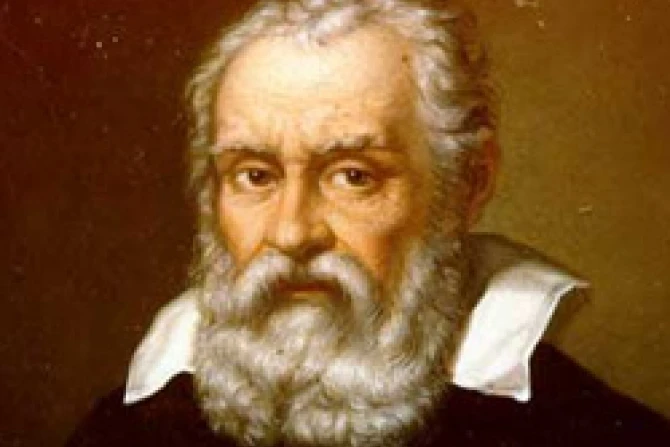
Galileo Galilei

.-

"Galileo and the Vatican” is the title of a new book that gathers together the documents of the commission created by Pope John Paul II on the famous Italian scientist and, according to Cardinal Paul Poupard who headed up the study group, seeks to debunk the black legend and other myths about this case.

In statements to Notimex, Cardinal Poupard recalled that John Paul II publicly apologized about Galileo in October of 1992.

“The Pope was concerned about clearing up a bad image of the Church in the eyes of the public, in which she was portrayed as the enemy of science. This is a myth, but myths pervade history and are not easily eliminated,” he said.

“All of this was used, especially beginning with the Enlightenment, as a weapon of war against the Church,” the cardinal added, and today it is bizarre that ideas “without any foundation” continue to be spread around, such as the legend that Galileo was burned at the stake when he was never even imprisoned.

Cardinal Poupard recalled that at the time John Paul II asked him if after acknowledging the errors of the judges, the Galileo case would be closed. He answered, “As long as there are free persons they will think however they want.”

“It was important to confront that myth, to acknowledge the errors in this terrible case and that was what was done,” the cardinal underscored.

The Book

“Galileo and the Vatican” was released by Marcianum Press and was co-authored by Mario Artigas, who died in 2006, and Msgr. Melchor Sanchez de Toca. Artigas was a professor of the Philosophy of Science in Barcelona and at the University of Navarre, and Msgr. Melchor Sanchez de Toca, was a under-secretary at the Pontifical Council for Culture.

The 300-page book has been published in Spanish and Italian and includes an introduction by Archbishop Gianfranco Ravasi, the current President of the Pontifical Council for Culture.

Archbishop Ravasi considers the work of the Commission on Galileo to be important for “leaving behind the vestiges of an unfortunate past, which led to tragic and reciprocal misunderstanding.”

Speaking to Notimex, Msgr. Sanchez de Toca explained that the main objective of the book is “to heal an open wound,” since despite the 17 years that have passed since the apology, “it seems every time like we are at the beginning.”

The judges of Galileo, he continued, in addition to the “obvious error” of believing that the Earth did not revolve, committed the mistake of entering a field outside their competence. “They thought the Copernicus system defended by Galileo with such vehemence endangered the faith of simple people and that it was their obligation to prevent it from being taught. This was an error and it is necessary that it be acknowledged,” the author said.

On October 31, 1992, Pope John Paul II issued a declaration acknowledging the errors committed by the Church tribunal that judged the scientific positions of Galileo Galilei.


RESOURCES »

Feb
12

Liturgical Calendar

February 12, 2012

Sixth Sunday in Ordinary Time

All readings:
Today »
This year »

Catholic Daily

Gospel of the Day

Mk 1,40-45

Gospel
Date
02/12/12
02/11/12
02/10/12

Daily Readings


First Reading:: Lev 13:1-2, 44-46
Second Reading:: 1 Cor 10:31-11:1
Gospel:: Mk 1:40-45

Saint of the Day

St. Julian the Hospitaller »

Saint
Date
02/10/12

Homily of the Day

Mk 1,40-45

Homily
Date
02/12/12
02/11/12
02/10/12

Most Popular

     HTML
Text only
Headlines
  

Follow us: