

Loading
Living the Christian faith today is a ‘revolutionary act,’ Archbishop Chaput writes
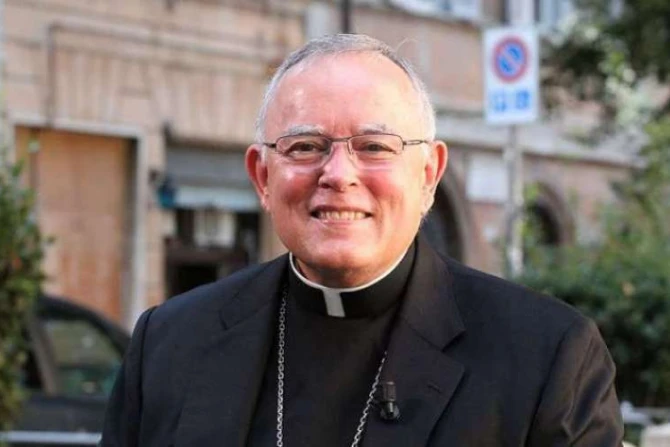
Archbishop Charles Chaput

.- In upcoming years Catholics will likely find it harder to influence the course of American culture or to live their faith “authentically,” Archbishop Charles J. Chaput has written. A social consensus which once supported Christian assumptions in the U.S. is “much weakened” to the point that there is “no more revolutionary act” than to live Christian faith with integrity, he said.
 
Writing in an essay titled “Catholics and the Next America” at the First Things website, the Archbishop of Denver noted a central “myth” of American Catholicism: the 1960 election of John F. Kennedy as president helped U.S. Catholics break through into the mainstream.

This is not entirely unfounded, he explained, because baptized Catholics make up the largest religious community in the U.S., serve in Congress and on the Supreme Court, while also having leading roles in the business world.

However, the direction of the country is less reassuring than these apparent signs of progress.

“Catholic statistics once seemed impressive. They filled many of us with tribal pride. But they didn’t stop a new and quite alien national landscape, a ‘next America,’ from emerging right under our noses,” the archbishop commented.

He cited reports that the number of Americans with no religious affiliation is at about 16 percent, double the percentage in 1990. One quarter of young Americans have no religious affiliation and show greater criticism towards Christianity. Catholic losses have been “masked” by Latino immigration, and less than 24 percent of Americans self-describe as Catholic even though 31 percent say they were raised Catholic.

“These facts have weight because, traditionally, religious faith has provided the basis for Americans’ moral consensus,” Archbishop Chaput explained, describing this consensus about God and man as the framework for public life.

“In the coming decades Catholics will likely find it harder, not easier, to influence the course of American culture, or even to live their faith authentically. And the big difference between the ‘next America’ and the old one will be that plenty of other committed religious believers may find themselves in the same unpleasant jam as their Catholic cousins,” he wrote.

America's Secularization

The archbishop then turned to American history, describing the “deeply Protestant” roots of the American experience, noting Gov. John Winthrop’s 1630 homily exhorting early English colonists to live Christian lives. Later, John Adams and many other American Founders were men who could blend an “earnest” Christian faith and Enlightenment ideas “without destroying either.”

Later criticisms of the Puritan colonists began to depict them as “intolerant, sexually repressed, narrow-minded witch-hunters.” Intellectual weakness and internal divisions among the American Protestant establishment, Archbishop Chaput said, allowed the secularization of American life mainly from 1870 to 1930.

“This insurgency could be ignored, or at least contained, for a long time … because America’s social consensus supported the country’s unofficial Christian assumptions, traditions and religion-friendly habits of thought and behavior,” Archbishop Chaput contended. However, law is only as strong as popular belief and the traditional consensus is “much weakened.”

“Seventy years of soft atheism trickling down in a steady catechesis from our universities, social-science ‘helping professions,’ and entertainment and news media, have eroded it,” the archbishop wrote in First Things.

In addition, modern consumer capitalism creates a citizenry of “weak, self-absorbed, needy personalities” to whom religious beliefs are depicted as private and not relevant.

“‘I shop, therefore I am’ is not a good premise for life in a democratic society like the United States,” he explained, claiming that the pastoral reality facing the Gospel today is “a human landscape shaped by advertising.”

Catholics and Secularization

The archbishop then considered the place of Catholics in this history. While Protestants had discriminated against Catholics, by 1960 mainline Protestantism had exhausted itself in the face of secularism.

“Catholics arrived on America’s center stage just as management of the theater had changed hands -- with the new owners even less friendly, but far shrewder and much more ambitious in their social and political goals, than the old ones,” Chaput wrote.

While Christian believers share unity in Jesus Christ and share with Jews a belief in the God of Israel, the gulf between belief and unbelief or disinterest is “vastly wider.”

“The world is a different place. America is a different place—and in some ways, a far more troubling one,” he commented, saying that Catholics helped make the country’s present flaws because of a desire for success, self-delusion, vanity, compromise and “our tepid faith.”

This leaves Catholics defenseless in the face of government pressures to push religious entities out of the public square, to promote same-sex “marriage,” and to undermine the family and the sanctity of human life.

“But the future is not predestined,” Archbishop Chaput said in closing his First Things essay. “We create it with our choices. And the most important choice we can make is both terribly simple and terribly hard: to actually live what the Church teaches, to win the hearts of others by our witness, and to renew the soul of our country with the courage of our own Christian faith and integrity. There is no more revolutionary act.”

* The number of messages that can be online is limited. CNA reserves the right to edit messages for content and tone. Comments and opinions expressed by users do not necessarily reflect the opinions or beliefs of CNA. CNA will not publish comments with abusive language, insults or links to other pages

RESOURCES »

Featured Videos

Group launches tour to end abortion in Canada
Actor admires Mexican martyr's strong defense of the faith
First video game about Jesus launches on Facebook
Vandals strike historic Santa Cruz church
EU accused of funding abortion with development money
Brent Dusing's advice to Internet Evangelists
Creator of Bible-based Facebook game lauds internet evangelism
Sacrifice of Titanic's Catholic priests recalled on 100th anniversary
Benedict XVI visits the Shrine of the Virgin of Cobre and meets President Raul Castro
Vestments for Pope's Mass in Cuba arrive with love from Peru
Pope Benedict XVI in Antonio Maceo Square in Santiago de Cuba
Benedict XVI meets with President Calderon and Mexican children
Americans speak up for religious freedom at nationwide rallies
Neighborhood rallies against plan to build strip club near convent
Pope's first Mexican address offers encouragement to faithful
Arrival of  Pope Benedict XVI  to Mexico
Pope offers his blessing to handicapped children in Mexico
Texas bishops hear call to unity at St. Peter's tomb
Interview with Br. Guy Consolmagno
Indiana Catholics respond to 'devastating' storm damage
May
25

Liturgical Calendar

May 25, 2012


All readings:
Today »
This year »

Catholic Daily

Gospel of the Day

Jn 21,15-19

Gospel
Date
05/25/12
05/24/12
05/23/12

Daily Readings


First Reading:: Acts 25:13b-21
Gospel:: Jn 21:15-19

Homily of the Day

Jn 21,15-19

Homily
Date
05/25/12
05/24/12
05/23/12
     HTML
Text only
Headlines
  

Follow us: