
Puebla, Mexico, Dec 9, 2025 / 05:00 am
The story of St. Juan Diego and Our Lady of Guadalupe began with the well-known apparitions of 1531. The Indigenous visionary remained for years dedicated to the preservation and dissemination of the message of the Virgin Mary at a chapel that is still preserved and forms an essential part of the Marian complex of Tepeyac.
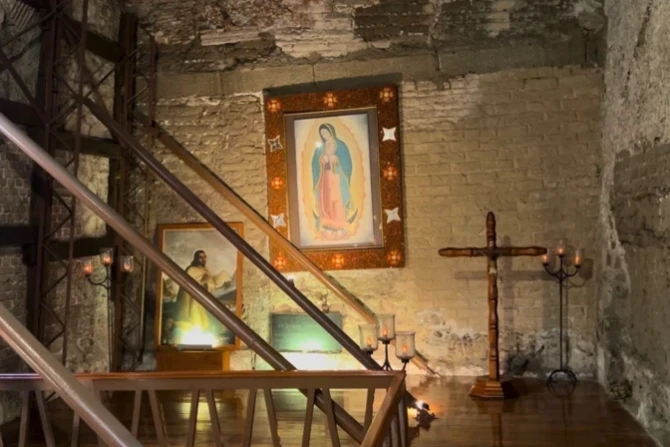
Next to the current Guadalupe Basilica in Mexico City is the old chapel built to house the image miraculously imprinted on St. Juan Diego’s cloak. This historical site is little known to pilgrims.
The origin of the chapel
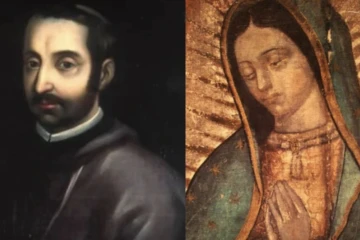
St. Juan Diego was the Indigenous man to whom the Virgin Mary appeared from Dec. 9–12, 1531, asking him to intercede with the first archbishop of Mexico, Friar Juan de Zumárraga, that a chapel be built “on the plain of Tepeyac” as a sign of her love for all nations.
It was on his tilma (cloak) that the image of the Virgin Mary was miraculously imprinted.
After the apparitions, the archbishop ordered the construction of a small chapel to house the tilma. St. Juan Diego lived next to it for 17 years, dedicated to recounting the events and caring for the sacred image until his death in 1548.
A Virgin for the ‘completely forgotten’
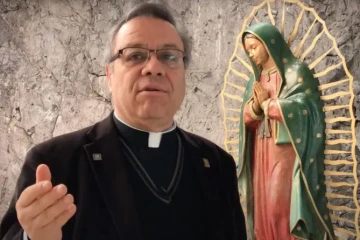
In an interview with ACI Prensa, CNA’s Spanish-language news partner, Father José de Jesús Aguilar of the Archdiocese of Mexico explained that at that time, Tepeyac — the place where the Virgin appeared and asked for her “sacred little house” to be built — was a valley on the outskirts of the city.
He noted that this request from the Virgin had a profound meaning, since many Indigenous people lived outside the urban center and “felt completely forgotten, without rights, or anything.”
The priest pointed out that the Mother of God wanted a place there as a gesture of closeness to those who “lived on the social and geographical margins.”
St. Juan Diego: Protector and herald of the faith
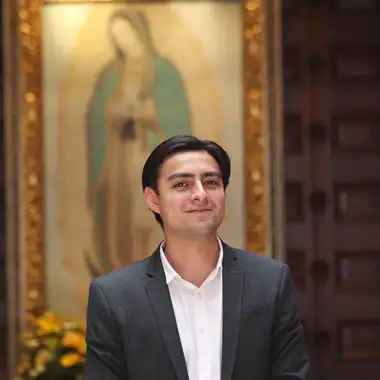
Aguilar emphasized that St. Juan Diego was the first to spread devotion to Our Lady of Guadalupe. “He recounted what had happened in his own words, and in this way, the news spread more and more, until it finally became very well known among the people,” he noted.
Aguilar said that the visionary of the Virgin Mary received pilgrims at that chapel and therefore requested permission to build his house next to it. Although the house no longer exists, a cross marks the site where it once stood.
According to the priest, St. Juan Diego died and was buried right there, after dedicating 17 years to caring for the image of the Virgin Mary.
From the chapel to the Old Parish Church of the Indians
The original chapel made of adobe was modified over time. Due to the growing devotion, in 1649, what is now known as the Old Parish Church of the Indians was built.
(Story continues below)
Inside the church, a wall from the first chapel is preserved, the exact spot where the tilma remained on display for more than 100 years before being moved to the new basilica in April 1709. That edifice is now known as the Old Basilica since the construction of the modern basilica was completed in 1976.
A message that resonated
Aguilar explained that the choice of Juan Diego as her messenger was no coincidence. He commented that the Virgin Mary “chose an Indigenous man to speak to the Indigenous people.”
In addition to sharing the same language, St. Juan Diego could recount details of the apparitions: “whether it was hot or cold, how the little birds sang that day, exactly where she first appeared, what the Virgin’s face looked like.”
The priest added that St. Juan Diego also faithfully conveyed the message that the Virgin entrusted to him: “Do not be afraid, am I not here, I who am your mother?”
These words — recorded in the Nican Mopohua — were spoken when the visionary was worried about his uncle Juan Bernardino’s serious illness. The Virgin assured him that he had been miraculously healed.
This message, the priest noted, remains the message of Our Lady of Guadalupe for her people, “so that anyone facing death, fear, unemployment, or a difficult situation can hear these words and have the certainty that things will work out for the best.
This story was first published by ACI Prensa, CNA’s Spanish-language news partner. It has been translated and adapted by CNA.