

Vatican City, Dec 14, 2025 / 07:00 am
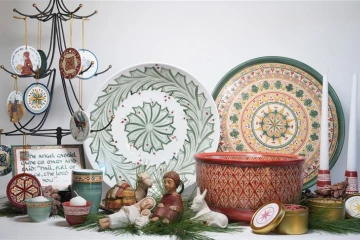
The Governorate of Vatican City State has announced the origins of the fir tree and Nativity scenes that will adorn St. Peter’s Square and the Paul VI Audience Hall this Christmas as well as those who prepared the tree’s decorations.
The decorations in St. Peter’s Square will once again have an Italian touch.
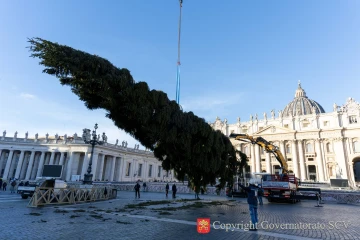
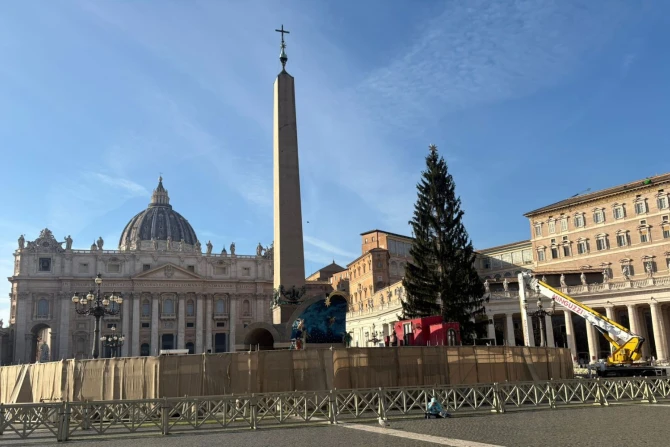
The chosen tree, an imposing 80-foot Norway spruce, comes from the town of Val d’Ultimo in Ultental, one of the most picturesque and lesser-known valleys of South Tyrol in the Alto Adige region of Italy. Along with the large tree, 40 smaller trees destined for Vatican offices and buildings will arrive soon.
In a novel initiative to ensure environmental sustainability and respect for nature, after Christmas, the main fir tree will be used to produce essential oils — a process that will be handled by the Austrian company Wilder Naturprodukte — and the rest of the wood will be donated to a charitable organization.
The Nativity scene, which is more of a village scene and will include life-size figures, will also be monumental in size. It measures 56 feet in length and is nearly 40 feet wide with a height of 25 feet and comes from the Diocese of Nocera Inferiore-Sarno, one of the oldest in Italy whose origins date back to the third century, when Nuceria Alfaterna — the ancient Roman city in the Sarno Valley — already had an organized Christian community.
The scene recreates emblematic elements of early Christian art from this region of Italy and includes a reproduction of the sixth-century baptistery from St. Mary Major Basilica, one of the best-preserved in the country. It also features an octagonal baptismal pool and frescoes that reveal Byzantine influences.
Also represented is the Helvius Fountain (“Fons Helvii”), an ancient monumental Roman fountain built between the first and second centuries A.D. associated with a local aqueduct that supplied water to the Roman population.
Upon this symbolic architecture unfolds a narrative that fuses sacred art, cultural heritage, and local identity.
The life-size figures of the Holy Family have been created by craftsman Federico Iaccarino, and the rest of the Nativity scene will include characters inspired by saints associated with this Italian region.
For example, among those represented are St. Alphonsus Maria de Liguori, who in 1732 founded the Congregation of the Most Holy Redeemer (Redemptorists), dedicated to evangelizing the most abandoned, especially in rural and marginalized areas; and a shepherd inspired by the Servant of God Don Enrico Smaldone, a priest who dedicated his life to caring for orphans, poor young people, and people with intellectual disabilities, for whom he created educational initiatives and welcoming spaces within the Church.
Around them, shepherds and animals parade across a pavement that evokes the ancient Roman roads.
In the central scene, Mary, Joseph, and the baby Jesus are accompanied by the ox and the donkey, the three Wise Men, and a shepherdess offering local produce — artichokes, San Marzano tomatoes, and dried fruit — as a tribute to the land that inspired the work.
The ensemble includes elements that invite spiritual reflection: a pendulum clock that alludes to the passage of time, an observer leaning over a balcony representing the human perspective on the mystery, and a fisherman holding an anchor, a symbol of faith and the spiritual journey of the jubilee.
The luminous star with a tail in the shape of an anchor that crowns the composition stands out, uniting the celestial and the earthly in a single gesture of hope.
The dedication will take place Monday, Dec. 15, at 5 p.m. local time in a ceremony presided over by Sister Raffaella Petrini, president of the Governorate of Vatican City State, accompanied by Archbishop Emilio Nappa and lawyer Giuseppe Puglisi-Alibrandi, general secretaries of the Vatican body.
The day will begin with several audiences with Pope Leo XIV, who will receive in the morning the delegations that donated the tree and those responsible for the huge Nativity scene that will adorn the square.
(Story continues below)
Among others, the afternoon ceremony will be attended by Bishop Ivo Muser of Bolzano-Bressanone; the mayor of Lagundo, Alexandra Ganner; and the mayor of Ultimo, Stefan Schwarz.
During the morning, the official presentation of a Nativity scene from Costa Rica, which will be installed this year in the Paul VI Audience Hall, will also take place.
Titled “Nacimiento Gaudium” (“Nativity of Joy”), the work by Costa Rican artist Paula Sáenz Soto, is an “affirmation of life from conception.” The piece consists of a figure of a pregnant Virgin Mary and 28,000 colored ribbons that symbolize lives preserved thanks to the support provided by Catholic organizations to pregnant women in vulnerable situations.
The Nativity scene — 16 feet long, 10 feet high, and 8 feet deep — will feature two interchangeable representations of the Virgin Mary: an image of her pregnant during Advent and another of her adoring the newborn child from Christmas Eve onward. In addition, 400 ribbons with prayers and wishes from children at the National Hospital of San José, Costa Rica, will be placed in the manger on Dec. 24.
The Costa Rican delegation that will meet with the pope will be composed of First Lady Signe Zeicate; her daughter, Isabel Chaves Zeicate; and the country’s ambassador to the Holy See, Federico Zamora.
This story was first published by ACI Prensa, CNA’s Spanish-language news partner. It has been translated and adapted by CNA.