

By Daniel Payne
CNA Staff, Dec 16, 2025 / 13:00 pm
The Wisconsin state government lost decisively a second time in what has become a convoluted effort to block a Catholic charity from receiving a long-running state tax exemption.
The Wisconsin Supreme Court on Dec. 15 blocked state Attorney General Josh Kaul’s attempt to fully eliminate an unemployment tax exemption after the U.S. Supreme Court ruled that the Diocese of Superior’s Catholic Charities Bureau was entitled to the tax break.
The U.S. Supreme Court in June had ruled that Wisconsin violated the First Amendment when it denied the tax exemption to the Catholic group on the grounds that the group’s charitable undertakings were not “primarily” religious.
The state responded in October by moving to eliminate the exemption entirely, arguing that the tax break is “discriminatory” and that ending the policy would “avoid collateral damage to Wisconsin workers.”
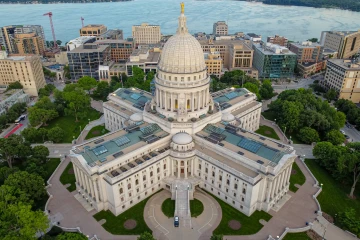
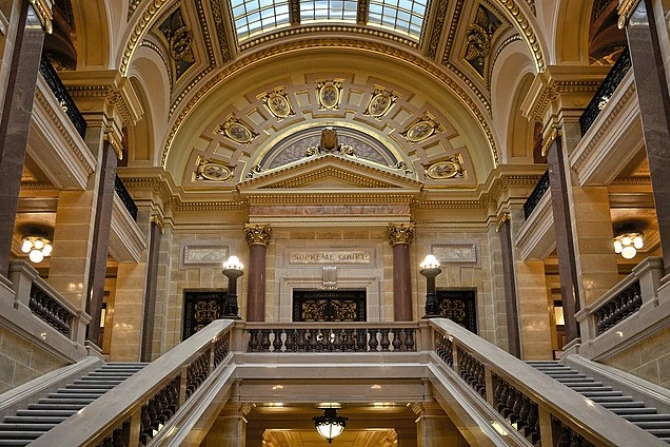
In a brief order on Dec. 15, the state’s high court affirmed that the U.S. Supreme Court ruling allows the Catholic charity to access the tax break. The court directed the state Labor and Industry Review Commission to declare the charity eligible for the exemption.
The religious liberty law group Becket, which has represented the Catholic charity in the legal fight, said in a press release that the Wisconsin Supreme Court had ended the state government’s “crusade” against the Catholic charity.
“You’d think Wisconsin would take a 9-0 Supreme Court loss as a hint to stop digging,” Becket Vice President Eric Rassbach said. “But apparently Attorney General Kaul and his staff are gluttons for punishment.”
“Thankfully, the Wisconsin Supreme Court put an end to the state’s tomfoolery and confirmed that Catholic Charities is entitled to the exemption it already won,” Rassbach said.
The ruling “protects not just Catholic Charities, but every faith-based organization that relies on this exemption to serve the public,” he added.
In its June ruling, the U.S. Supreme Court said the First Amendment “mandates government neutrality between religions” and that Wisconsin had failed to adhere to this principle in refusing to issue the tax exemption to Catholic Charities.
“It is fundamental to our constitutional order that the government maintain ‘neutrality between religion and religion,’” Justice Sonia Sotomayor wrote in the decision. “There may be hard calls to make in policing that rule, but this is not one.”
Justice Clarence Thomas, meanwhile, said that governments “may not use [entities such as a Catholic charity] as a means of regulating the internal governance of religious institutions.”
Following the ruling this week, David Earleywine — the associate director for education and religious liberty at the Wisconsin Catholic Conference — said the Catholic charity has been fighting for the exemption for “decades.”
“[T]rue Catholic charity is inherently religious and cannot be reduced to another secular social service,” he said.