
Washington, D.C. Newsroom, Dec 19, 2025 / 15:52 pm
U.S. Secretary of State Marco Rubio said there will be a plan “early next month” for religious worker visas that would avoid giving preference to one denomination over another.
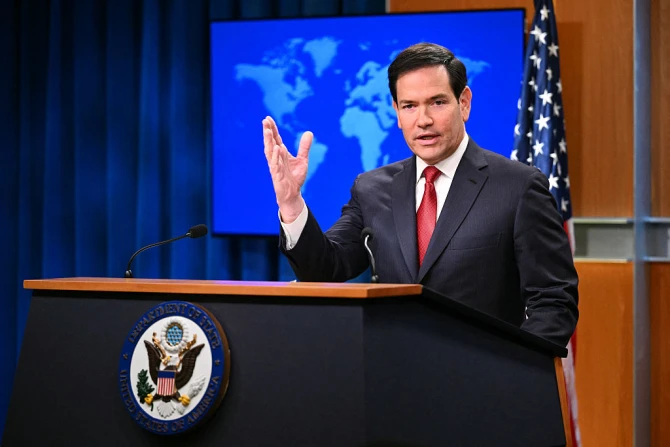
Rubio said at a Dec. 19 press conference in Washington, D.C., that the administration has “worked closely with a lot of the religious authorities” to reach a plan.
In July, U.S. Citizenship and Immigration Services released a report alleging widespread fraud in its permanent residence program for unaccompanied minors and said it caused a backlog in issuance of visas to migrant priests and religious.
Visas for religious workers allow foreign nationals to work for a U.S. religious organization, through the temporary R-1 visa or a Green Card EB-4 visa, which requires at least two years of membership in the same denomination and a job offer from a qualifying nonprofit religious group.
Rubio previously said the administration was working to create a “standalone process” for religious workers, separate from other competing applicants — such as from the juvenile program — to the employment-based fourth preference (EB-4) category of visas.
Rubio said Friday the plan has factored in multiple aspects, including where the religious workers are coming from and their specific denominations.
“We’re not discriminating in favor of one versus another,” he said. “Some denominations are more professionalized in terms of what they’re able to provide us with and information versus others.”
“We have country-specific requirements depending on the country they’re coming from. But I think we have a good plan in place to put that into effect,” Rubio said.
“I think we’re going to get to a good place,” Rubio said. “We don’t have it ready yet. All this takes time to put together, but we’re moving quickly. I think we’ll have something positive about that at some point next month, hopefully in the early part of next month.”
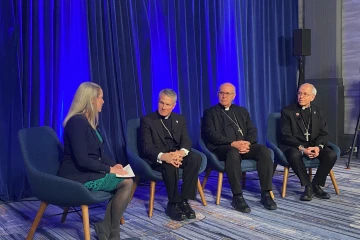
The department has worked “with a number of denominations in that process,” Rubio said. “One of the big users of that system is the Catholic Church. We worked with the conference of bishops.”
Priests and other Church leaders have expressed fear of having to leave their ministries and return to their home countries, then endure lengthy wait times before coming back. Church officials have warned that a continuing backlog could lead to significant priest shortages in the United States.
“We are grateful for the administration’s attention to this important issue for the Church and value the opportunity for ongoing dialogue to address these challenges so the faithful can have access to the sacraments and other essential ministries,” a spokesperson for the USCCB told CNA.
Since the issue of the backlogged visas started, multiple U.S. dioceses have called for a solution. Priests in the Archdiocese of Boston who are in the U.S. on visas were urged to avoid international travel amid the Trump administration’s immigration policies and deportations.
Last month, a Catholic diocese in New Jersey dropped its lawsuit against the U.S. government, in anticipation of an administrative fix to the religious worker visa issue.
Immigration vetting process
Rubio was asked if the administration would expand the U.S. Refugee Admissions Program in the coming year, particularly for religious minorities facing persecution in places like Afghanistan, Syria, and Iran.
(Story continues below)
“In the last four years, we had a flood of people,” Rubio said. “So that’s what we confronted. We have to stop that. And we did. We’ve been successful.”
Rubio further spoke on the topic of immigration and the importance of the “vetting” process, in which he answered questions both in Spanish and English.
The nation can see the border is secure and “the number of illegal entries has completely collapsed,” Rubio said. “Now we’re facing the second challenge, and that is we’ve admitted a lot of people into the United States, and perhaps the overwhelming majority of them are not bad people and so forth. This is all true.”
“There are people in this country who got in through some form of vetting that was wholly insufficient,” Rubio said.
“We’ve seen tragic evidence of that very recently, including people that we claim to have vetted. Why does that happen? Because there are some places where you can’t vet people,” he said.
“You can only vet people on the basis of information you have about them,” Rubio said. But that information is based on if the department or “some local authority that actually has any information about them.”
“That is the challenge we’re facing, which is why the president put a stop to all of these things until these systems for admitting people into our country can be improved,” he said.
Rubio criticized the immigration policies of the Biden administration, calling the policies reckless and incompetent, and said there’s a desire to fix immigration processes and know who’s in the country.
In terms of legal immigration, the United States “remains the most generous country in the world,” Rubio said.
“This year alone, close to a million people will enter this country legally,” he said. “But we do have a right, like every sovereign country does, to know who you are, why you’re coming, what you’ve done in the past, and what we think you might or might not do in the future.”
“Most of the countries in the world have far more restrictive immigration policies than the United States has ever had,” Rubio said.
The Trump administration expanded use of deportations without a court hearing this year and ramped up federal law enforcement efforts to identify and arrest immigrants lacking legal status. The administration set a goal of 1 million deportations this year, and the Department of Homeland Security said 1.6 million people self-deported since Jan. 20.
U.S. bishops issued a special message in November opposing the indiscriminate mass deportation of immigrants who lack legal status and urged the government to uphold the dignity of migrants.