

By Zofia Czubak
Rome Newsroom, Dec 23, 2025 / 15:55 pm
Fifty million people are currently being trafficked around the world, according to the 2023 Global Slavery Index, driving over $236 billion into the hands of criminals, with numbers continuing to rise.
The 2024 United Nations Office on Drugs and Crime (UNODC) report documented that between 2019 and 2022 the number of identified trafficking victims increased by 25%, forced labor rose by 47%, and the number of child victims rose by 31%, with a dominating 38% increase in girls.
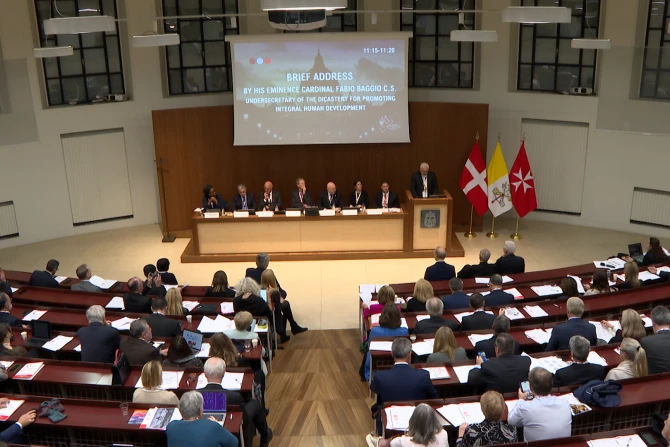
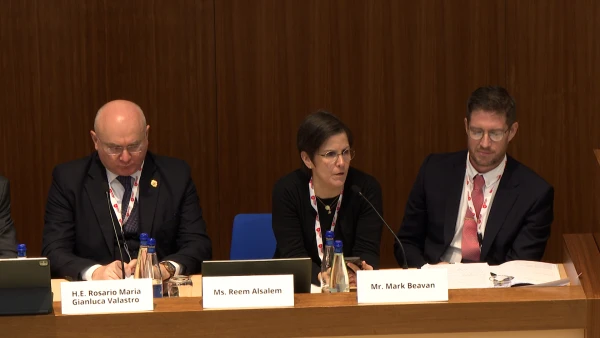
Earlier this month, the Sovereign Order of Malta, Praeveni Global, the Santa Marta Group, and the Institute of Anthropology of the Pontifical Gregorian University organized an international conference in Rome to discuss prevention efforts, strengthen collaboration, and promote comprehensive action plans.
Conference panelists included law enforcement, activists, United Nations rapporteurs, and human rights experts as well as appearances from Cardinal Fabio Baggio, the undersecretary of the Dicastery for Promoting Integral Human Development, and Pam Bondi, attorney general for the U.S. Department of Justice.
Survivor testimony
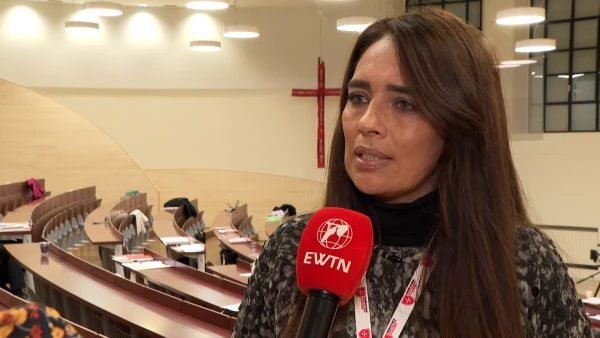
Among those participating in the conference was Karla De la Cuesta, who was rescued alongside other girls from the hands of her traffickers in Mexico.
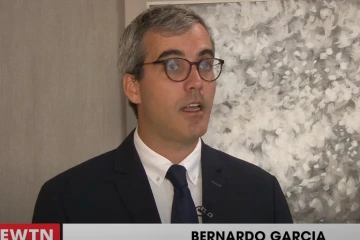
“We were victims of human trafficking in different ways,” De la Cuesta told EWTN News, explaining that their forms of exploitation included “abuse, sexual exploitation, labor slavery, torture, unlawful deprivation of liberty, forced marriages, forced abortions — multiple crimes committed against us.”
It was thanks to the intervention of Interpol (International Criminal Police Organization) that De la Cuesta’s alleged perpetrators were caught and the girls were able to return home.
After becoming a lawyer and an activist, De la Cuesta studied her own case file in great depth. More than 10 victims had testified before authorities in her case, but those authorities did not act in accordance with the law or open proper investigations into their cases. This led De la Cuesta to write a book: “All in the Light: The Criminal Case that Mexico Left in the Darkness.”
“I [wrote] about all of this analysis I carried out as a lawyer and activist, hand-in-hand with other experts, where I specifically laid out all of these … omissions on the part of the authorities.”
The publications of De la Cuesta’s findings didn’t come without repercussions. “The Mexican state brought against me great retaliation, brutal attacks,” she said. “Which is why in less than six months after the publication of my book, I had to leave my country and now I live in Spain seeking international protection.”
De la Cuesta highlighted that the existence of safeguarding laws is not enough — the laws need to be enforced.
“In my country, we have a wonderful law, but in reality, it does not end up addressing the actual needs,” she stated. “There is no proper prevention, no proper prosecution, and no proper protection for the victims.”
De la Cuesta said no one should ever have to endure what survivors of human trafficking have lived through. While the harm cannot be undone, she emphasized that resilience is still possible, even in the face of pain that often lasts a lifetime.
“We can indeed make flowers grow from these wounds,” she said.
(Story continues below)
Trafficking and pornography go together
The trafficking of children is increasing globally. Not only is it an issue across borders but also in places where children should feel their safest — at home.
A member of the conference panel, Reem Alsalem, U.N. special rapporteur on violence against women and girls, spoke about how human trafficking and pornography are often interconnected.
“Pornography is a system of online prostitution,” Alsalem said. “So by definition it is exploitative, abusive, and preys on women and girls. Some of the violence and abuse that they’re exposed to happens also through trafficking. They are trafficked for the purpose of being sexually exploited in pornography.”
Alsalem refuted the widely used argument that consuming consensual pornography is the better option.
“Many digital platforms and businesses involved in pornography, first of all, use nonconsensual material; second, many of the women and children that appear in these images and material have been coerced, have been forced, have been threatened and again, as we said, especially the adults have not consented to this, even after they have requested that this material be removed many of these platforms have refused to do so,” she said.
‘Written into the Gospel’
Another panelist at the conference was pyschologist and theologian Father Hans Zollner, director of the Institute of Anthropology at the Pontifical Gregorian University. The Jesuit priest is known for his work in the field of safeguarding against sexual abuse in the Catholic Church.

“What we need to do … is to understand that child protection or the safeguarding of all people is something that is written into the Gospel,” he told conference participants. He said he believes the Church has made a lot of progress in the last 12 years in terms of supporting victims, especially those who have been subject to clergy abuse.
“If we understood it better and if it was integrated better and more wholeheartedly, that would also come with an openness to listening to stories of victims who want to share with us their life experience,” he said.
Zollner continued to say that evil has been in the world since the beginning of humanity and that there is no salvation from crime and sins except in the perspective of our future in heaven.
“Jesus Christ himself has been a victim of violence,” Zollner said. “And he suffered death because he was unjustly treated.”
“So we believe that he has risen, and that gives us hope that with all the evil that is happening today we still have some hope, some perspective — that this is not the end of it, that the violence and harm we do to each other as human beings is not the last word.”