
Jan 2, 2026 / 12:58 pm
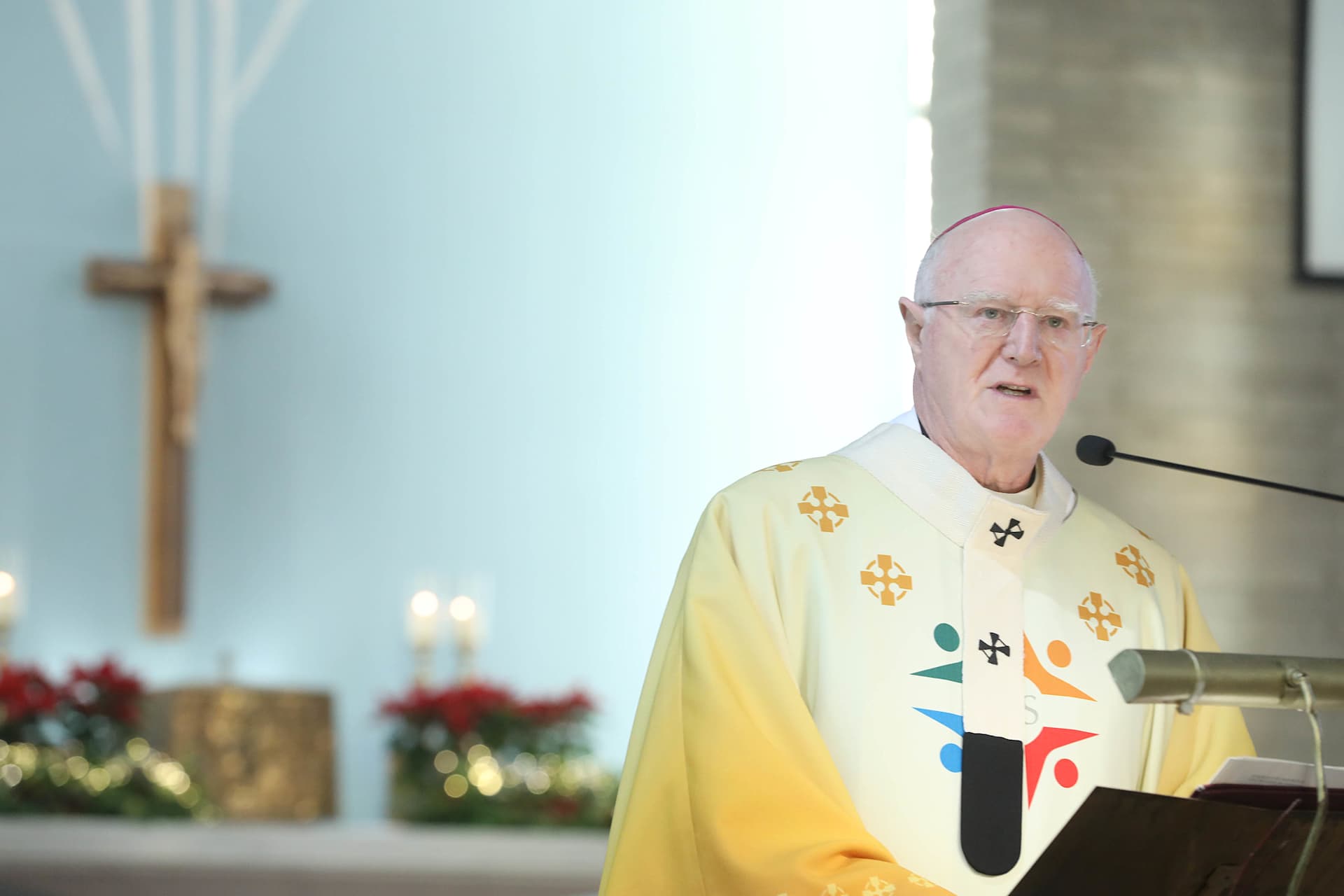
In his New Year’s Day homily at Newtownpark Avenue Church in Dublin, Archbishop Dermot Farrell called upon Ireland’s politicians to show leadership in promoting peace and in how they communicate and articulate it.
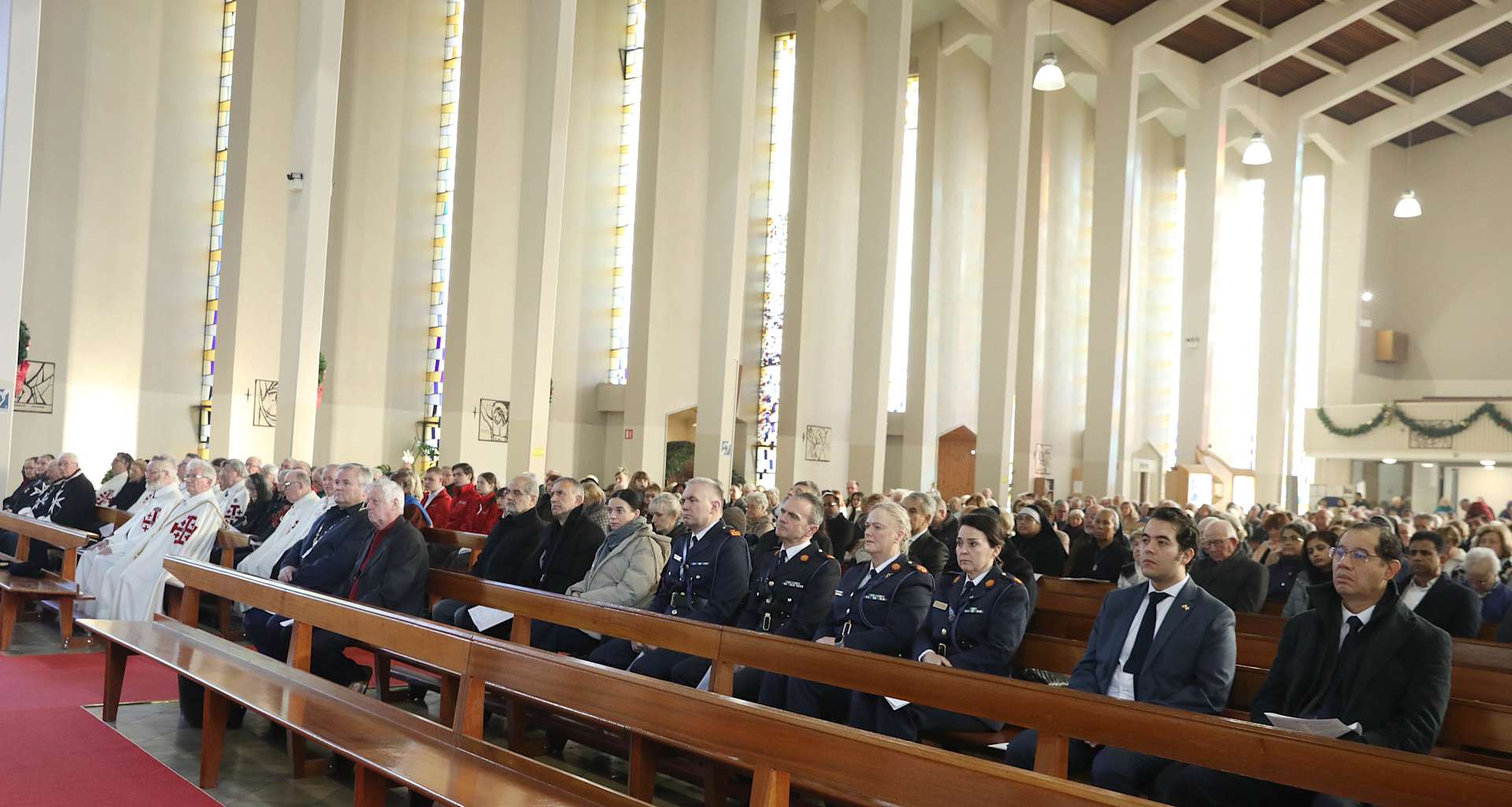
The archbishop was speaking at a Mass for the World Day of Peace where apostolic nuncio Archbishop Luis Mariano Montemayor and Archbishop Emeritus Diarmuid Martin were among the concelebrants.
His appeal comes at a time when Ireland’s traditional neutrality has come under scrutiny and as the country prepares to take over the EU presidency in the second half of 2026, where defense will be high on the agenda. The presidency of the Council of the European Union is a role that rotates among the EU member states every six months. Fifty European leaders are due to visit Ireland during its presidency.
“Yes, leaders are important; indeed, good leadership is vital. However, we need to take to heart that good leaders bring people with them,” Farrell said.
Speaking before a congregation that included government ministers and representatives of the Irish Defence Forces, Farrell quoted the late Nobel Prize winner John Hume.
“Many here this morning will remember the conviction and witness of the late John Hume. For John Hume, ‘political leadership [was] like being a teacher. It’s about changing the language of others,’ he said. ‘I say it and go on saying it until I hear the man in the pub saying my words back to me.’”
The archbishop continued: “Ireland has a proud record in international work for peace. Now, in our days, there is a need and opportunity for the Irish state to articulate how this tradition and the values which underpin it will be continued in a rapidly changing international situation.”
Farrell said there is a need as well as an opportunity for Ireland to articulate how this peace tradition and the values that underpin it can continue today.
“It is not enough to invest in defense capacity or to point to how the circumstances of our traditional military neutrality have changed,” he said. “Ireland’s commitment to promoting a sustainable peace needs a new articulation. We are not in an either-or situation. It is not them or us. When we invest in peace everybody wins.”
The Taoiseach Micheál Martin and Tánaiste Simon Harris have made repeated statements on Ireland’s neutrality, but that has not prevented them from making the state’s views known on international conflicts.
On Ukraine and Gaza, for example, Ireland has taken a decisive political stance, which has aroused the ire of the Russian and Israeli governments.
Writing in the London’s Daily Telegraph, Barry O’Halloran voiced an opinion shared by some in the U.K. and Europe that Ireland needs to invest to defend itself irrespective of its neutrality: “Irish neutrality is a legacy of Éamon de Valera’s considerable antipathy to all things British and has been the lodestar of Irish foreign policy since the state was founded.”
The Irish state relies on the British Royal Navy to protect Irish coastal waters, and the country’s geographical position at the periphery of Europe makes it strategically of interest to Russia.
Russian submarines have been mapping the transatlantic cables in Irish waters, which carry about 75% of the data traveling between Europe and the United States.
“After decades of underfunding, the Irish Defence Forces have no idea what is going on in the seas around Ireland. The navy doesn’t have the ships, the personnel, or even the electronic equipment to monitor hostile activity in our waters,” Stephen Collins wrote in the Irish Times.
(Story continues below)
Martin has acknowledged concerns about economic security in terms of gas connectors and subsea cables and dismissed a statement by Maria Zakharova, a spokesperson for Russia’s Ministry of Foreign Affairs, that the European Union and Ukraine were attempting to interfere with Ireland’s neutral status.
In his homily on New Year’s Day, Farrell was unequivocal that governments clearly have a critical role to play in shaping the course of international events and the onerous responsibility of pursuing the path of peace even in the face of provocation.
“Enduring peace is born of compassion and respect; it is born of patience, of attention to the other, of the conviction that the one who presents themselves as different, as other, is actually like oneself, is a true sister or brother of mine. This is what our faith means when we say that peace is born of hope.”