Jan 3, 2026 / 11:56 am
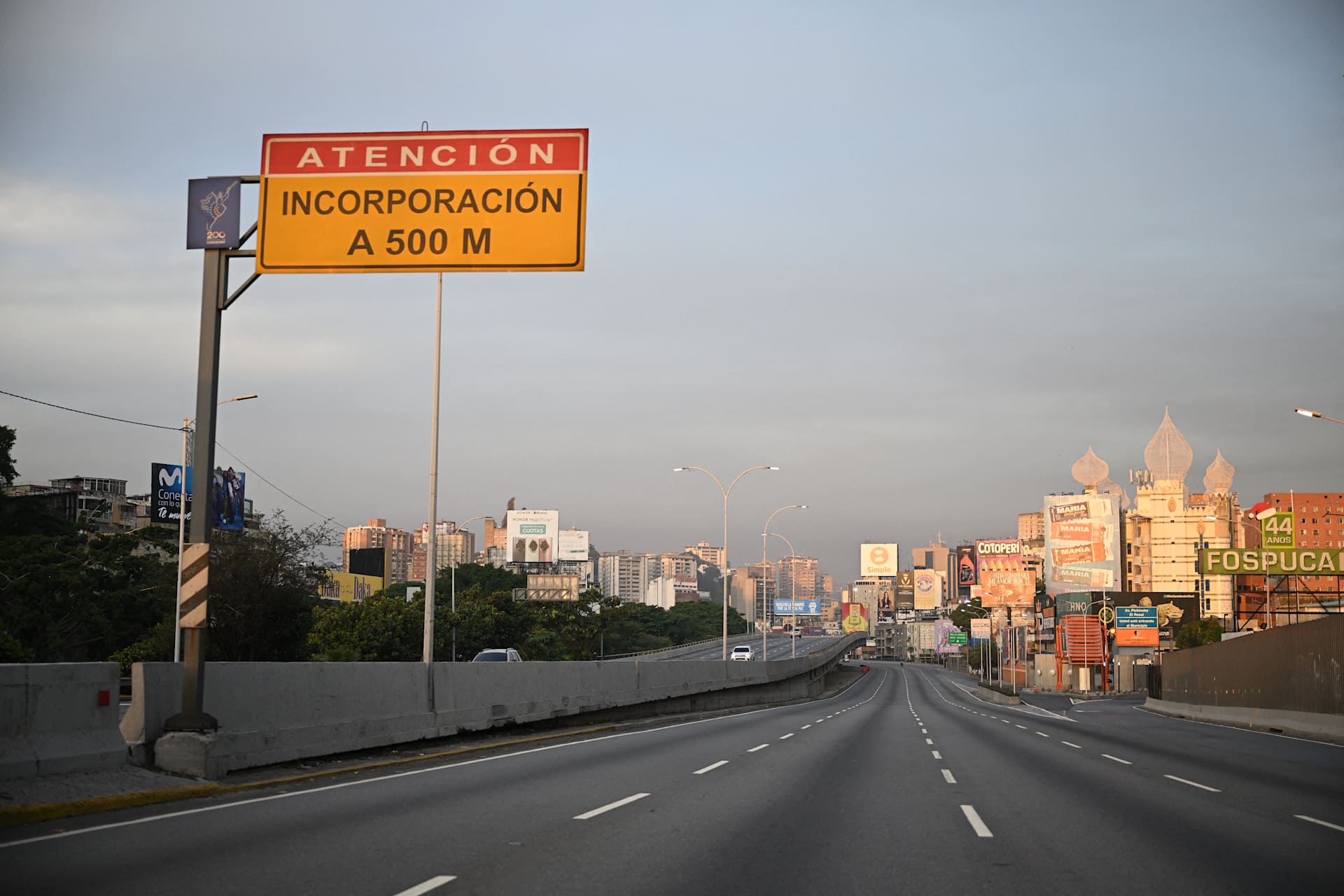
The Vatican’s daily newspaper L’Osservatore Romano opened its Saturday edition with news of U.S. airstrikes against Venezuela, reporting attacks in the capital, Caracas, as well as on several military bases around the country.
The main image on the paper’s front page showed a dense column of smoke rising over an urban area, reflecting what the paper described as the impact of the military offensive and the sudden escalation of the regional crisis.
The newspaper said air raids hit Caracas overnight and several military installations, and it referred to a claim by U.S. President Donald Trump that Venezuelan President Nicolás Maduro had been captured and removed from the country.
The paper said the situation remains “highly volatile,” with growing uncertainty about the political, social, and humanitarian consequences of the attack.
Founded on July 1, 1861, L’Osservatore Romano — defined on its masthead as a “political-religious daily” — aims to report on and reflect the life of the Church and serves as a vehicle for disseminating the pope’s voice, rather than functioning as a direct public outlet for the Vatican.
The L’Osservatore Romano article, written in Italian, also reported the response of the Caracas government, which called the events a “most serious aggression” and denounced what it said was a direct violation of national sovereignty.
So far, there has been no official comment from the Vatican or from Pope Leo XIV regarding the incident, though the Holy Father could address the situation in Venezuela after praying the Angelus on Sunday.
On Dec. 2, 2025, returning from his first international trip — to Turkey and Lebanon — the pope voiced concern about the risk of a U.S. invasion of Venezuela.
The pontiff said at the time that he was closely following the situation, both through the Venezuelan bishops and through the apostolic nuncio in the country, Archbishop Alberto Ortega Martín.
“Regarding Venezuela, at the level of the episcopal conference, with the nuncio, we are looking for ways to calm the situation, above all seeking the good of the people, because so many times the ones who suffer in those situations are the people, not the authorities,” the pope told reporters on the return flight.
He added: “It is better to look for ways of dialogue — even pressure, economic pressure — but seeking another way to bring about change, if that is what they decide to do in the United States.”
Vatican Secretary of State Cardinal Pietro Parolin, who served as apostolic nuncio in Venezuela from 2009 to 2013 and is well acquainted with the country’s situation, also denounced the existence of “unjust prisons” and “oppressed” people in Venezuela on Oct. 21, 2025.
In a homily during a Mass of thanksgiving for the canonization of Venezuela’s first two saints — St. José Gregorio Hernández and St. Carmen Rendiles — Parolin urged the faithful to imitate them and said: “Only in this way, dear Venezuela, will you pass from death to life!”
“Only in this way, dear Venezuela, will your light shine in the darkness, your darkness will become noon — if you listen to the Word of the Lord who calls you to open unjust prisons, to break the bars of the stocks, to set the oppressed free, to break every yoke,” Parolin said.
This story was first published by ACI Prensa, CNA’s Spanish-language news partner. It has been translated and adapted by CNA.