
By David Ramos
Jan 4, 2026 / 07:00 am
With the signing of the law that recognizes that “the human being in gestation or the unborn child is a natural person,” Puerto Rico concluded 2025 with historic achievements in the defense of life. For Puerto Rican Sen. Joanne Rodríguez, it was a year “in which unprecedented progress was made.”
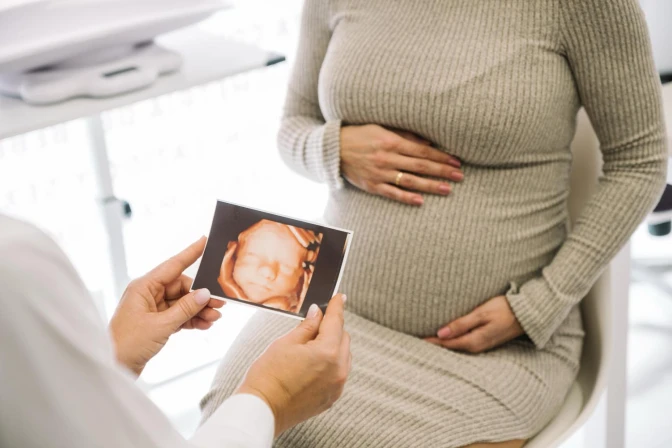
On Dec. 22, 2025, the governor of Puerto Rico, Jenniffer González, signed Law 183-2025 — formerly Senate Bill 504 — which recognizes that the conceived child, “at any stage of gestation within the mother’s womb,” is a “natural person.”
A “natural person” is simply a human person as distinguished from a juridical person such as a corporation.
Three days earlier, on Dec. 20, González had signed Law 166-2025 — formerly Senate Bill 3 — which stipulates that it will be considered “first-degree murder when a crime is committed against a pregnant woman, resulting in the death of the unborn child at any stage of gestation within the mother’s womb.”
It will also be considered first-degree murder when the unborn child dies as a result of “the use of force or violence against the pregnant woman.”
These laws are in addition to the signing on Oct. 30, 2025, of Law 122-2025 — Senate Bill 297 — which establishes guidelines for abortion cases involving minors under 15 years of age, stipulating that at least one of the girl’s parents or legal guardians must sign an informed consent form and that authorities must be notified in cases of suspected rape.
Laws 166 and 183 were authored by the president of the Senate of Puerto Rico, Thomas Rivera, and Rodríguez is listed as a co-author, among other legislators.
Rodríguez is also the author of the bill passed as Law 122.
‘Unprecedented progress’ after more than 4 decades
In a Jan. 1, 2026, interview with ACI Prensa, CNA’s Spanish-language news partner, Rodríguez noted that “despite the fact that the majority of the population had consistently expressed itself in favor of protecting the lives of unborn children, the political class, dominated primarily by progressive factions, refused to pass any legislation that represented even the slightest step in defense of the human right to life.”
“Multiple legislative efforts were defeated for more than four decades, until 2025, when unprecedented progress was achieved. In just the first year of the new government, the Legislative Assembly approved three bills that address the issue of abortion,” she said.
Puerto Rico is a commonwealth of the United States; its constitution governs internally, but it is subordinate to the U.S. Constitution. Therefore, decisions of the U.S. Supreme Court, such as the now-overturned Roe v. Wade — which at the time opened the door to abortion throughout the United States — also apply in Puerto Rico and directly affect its legal system.
Rodríguez emphasized that the constitution of Puerto Rico “expressly recognizes the right to life, a recognition that, according to the legislative record during the drafting of the constitution, was included with the clear purpose of protecting the lives of human beings in the womb.”
“However, our constitutional intent was overridden by the now-obsolete U.S. Supreme Court precedent established in Roe v. Wade. Since then, Puerto Rico became one of the most permissive jurisdictions regarding abortion, allowing abortions at any stage of pregnancy, at any age, and for any reason.”
For the Puerto Rican senator, “the fundamental change” brought about by the laws signed in recent months “lies in the explicit recognition of the dignity of human life from conception, thus restoring the moral foundation that, as a people, we established in the drafting of our constitution in 1952.”
A ‘powerful message’
(Story continues below)
Rodríguez pointed out that “by recognizing the unborn child as a natural and legal person, and by classifying as first-degree murder an attack against a pregnant woman in which the baby dies, we are not only recognizing the human nature of the child in the womb, but also the dignity of its humanity.”
“In other words, it is not only about the importance of the new legal implications and the practical consequences in the application of the law, but about an even more profound change due to its ontological dimension,” she said. “The message is clear: In the womb of a pregnant woman there is not an indecipherable object without dignity but a subject, a developing human being, who has dignity and whose value is intrinsic to his or her human nature,” she added.
In response to the criticism that has circulated following the signing of the law that recognizes the unborn child as a person, the senator clarified that “no article of the new law alters the Medical Practice Act, the Medical Emergencies Act, or the standards of treatment in life-threatening situations.”
“Clinical decisions in emergency scenarios continue to be based exclusively on the risk to the patient’s life or health. The bill does not introduce anything that could prevent or delay such treatment,” she emphasized.
“It is the legal opinion of the current secretary of justice of Puerto Rico that, after the overturning of Roe v. Wade in the United States, abortion in Puerto Rico is governed by the Puerto Rican Penal Code. This interpretation means that abortion is only legal when performed to protect the life or health of the woman,” she said.
Surgery ban
Rodríguez said “the passage of Law 63-2025 constituted another colossal achievement in defense of the dignity of human life, specifically of minors at risk from the currents of woke ideology that have reached our shores.”
Law 63-2025 — which bears the signatures of Rivera, Rodríguez, and Sen. Jeison Rosa as authors — prohibits “surgical interventions or drug treatments that alter the biological sex of a minor under the pretext of a gender transition or as part of a treatment for gender dysphoria.”
“This law represents an absolute halt to the use of minors to promote unscientific and unnatural ideas that cause them irreversible physical harm,” Rodríguez emphasized.
“With the signing of this law, no minor under 21 years of age in Puerto Rico can be subjected to chemical or surgical mutilation treatments as part of a progressive trend that, through the denaturalization of the human being, uses the most vulnerable to advance its agendas,” she emphasized.
With the achievements accomplished in 2025 and with an eye on the future, Rodríguez sees her work as “continuing to contribute to the reconstruction of the moral and human fabric that has characterized us as a people since the dawn of our national identity.”
“Puerto Rico was forged in the crucible of Christianity, and it is from our cultural and spiritual heritage that I seek to continue upholding the values that were the cradle and foundation of Puerto Rican identity,” she affirmed.
‘A turning point’
In a Spanish-language article titled “The Courage to Legislate with Conviction,” published on the Senate’s website, Rivera emphasized that “this 2025 legislative year marked a turning point in the legal and moral history of Puerto Rico,” highlighting that these and other laws passed stem from “the commitment I made to the people to protect fundamental rights, the traditional family, and the reaffirmation of the principles and values that distinguish us as a society.”
“These laws reflect a vision of the state that recognizes that religious freedom is not an administrative concession but a fundamental right; that the family is not an abstract concept but the institution and backbone of a society; that childhood requires special protection from public authorities; and that human life, from its most vulnerable stage, deserves legal and moral respect.”
“From a Christian perspective, these laws are rooted in principles of conscience, responsibility, stewardship, and justice,” he affirmed.
After warning that “Puerto Rico faces the challenge of preserving its freedom without losing its legal and moral soul,” the Senate president said that “from the perspective of the Christian faith, it is proclaimed that the law must serve life, the family, and social peace. From a legal perspective, it is maintained that all legislation will be evaluated in the courts, as is appropriate in a democracy, but also in the court of history.”
Rivera concluded his article by quoting St. John Paul II’s apostolic exhortation Familiaris Consortio: “The future of humanity passes by way of the family.”
This story was first published by ACI Prensa, CNA’s Spanish-language news partner. It has been translated and adapted by CNA.