


Jan 6, 2026 / 12:59 pm
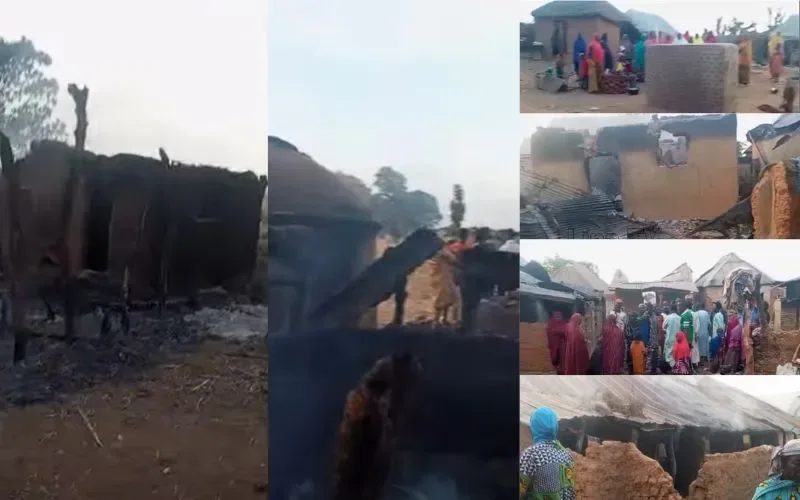
At least 42 people have been killed and an unknown number of women and children abducted following a series of coordinated attacks on villages located in Nigeria’s Kontagora Catholic Diocese.
In a statement issued Jan. 5, the director of social communications of the diocese, Father Matthew Stephen Kabirat, provided details about the attacks.
“A devastating attack occurred in Kasuwan Daji, a village in Agwara local government, Niger state, as bandits invaded early Sunday morning. The attack has left over 40 people killed and several others kidnapped,” Kabirat said. “Reports indicate the bandits operated for hours with no security presence.”
According to Kabirat, the attacks were part of a wave of violence that began on Dec. 28, 2025, when heavily armed bandits riding about 30 motorcycles emerged from their hideout in the Kainji Game Reserve.
“They crossed into Kebbi state, north of Shafaci, and proceeded to the village of Kaiwa, where they killed five people and set fire to houses and grain stores. They then moved on to Gebe, where they killed two more people,” the priest said.
Kabirat explained that on the evening of Jan. 1, the bandits passed through Shafaci again and burned documents at the police station before spending the night in the bush.
On the morning of Jan. 2, they passed near Bako-Mission and the Tungan Kure junction near Pissa Village, where they gave some individuals a telephone number to be delivered to the district head of Pissa and the village head of Sokonbora.
At about 10 a.m. that same day, the bandits entered the Catholic church compound in Sokonbora and destroyed a crucifix, pictures of the Stations of the Cross, and musical instruments, Kabirat said, adding that the attackers also stole two motorcycles, mobile phones, and cash from the Catholic church in Sakonbora.
“After leaving Sokonbora, they occupied some Kambari compound nearby, where they spent the rest of that day until the afternoon of the next day [Jan. 3], eating the chickens and goats of the people,” Kabirat further recounted.
“Towards the evening of [Jan. 3], they left the Kambari compound near Sokonbora and entered the village of Kasuwan Daji, about eight kilometers [about five miles] from Sokonbora,” he said.
Kasuwan Daji is a small village with a large Wednesday market. The attackers, the priest said, “set fire to the market and surrounding houses, slaughtering 42 men after tying their arms behind their backs.”
“These victims were both Christians and Muslims; they also kidnapped an unknown number of women and children,” Kabirat said.
The priest explained that this particular group of criminals has been roaming freely across the northern part of Borgu local government area in Niger state and the southern part of Shanga local government area in Kebbi state between Dec. 28 and Jan. 3 without being challenged by security forces.
As a result, Kabirat said, the Papiri schoolchildren who were recently released from captivity have been further traumatized.
The children, he said, “are forced to hide in the bush with their families whenever reports indicate that the bandits are nearby, both day and night.”
“Panic is now widespread around the villages, where rumors abound,” the priest said, adding: “In this entire area, there are many villages. However, there is not a single large town where people can run to for safety. Nevertheless, people are evacuating the area in large numbers, abandoning their homes and properties.”
(Story continues below)
He added: “In view of the above, it is clear that pending the elimination of the bandits and their hideouts in Kanji Game Reserve, there is an immediate need for a large and well-equipped military task force in the area capable of and empowered to pursue, engage, and eliminate the bandits whenever they come out of the game reserve again for further attacks,” Kabirat said.
“Without such a task force, there will be a massive and ongoing loss of life and permanent displacement of large numbers of people.”
This story was first published by ACI Africa, CNA’s news partner in Africa, and has been adapted by CNA.