

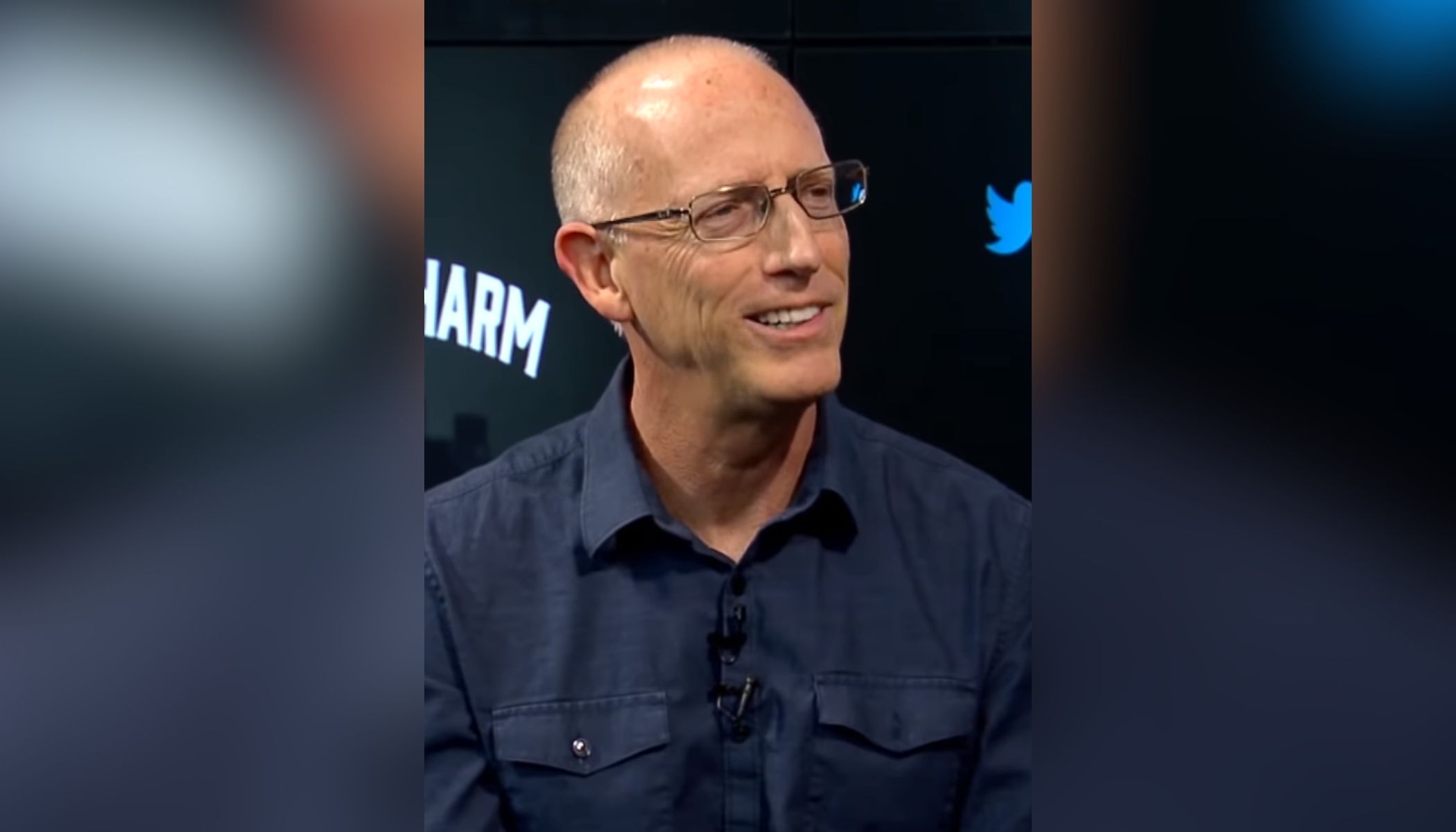

By Tyler Arnold
Jan 6, 2026 / 17:38 pm
Scott Adams, the 68-year-old cartoonist who created the decades-long “Dilbert” comic strip, announced he is converting to Christianity amid his deteriorating health caused by terminal cancer.
Adams, who was diagnosed with prostate cancer in May 2025, had previously been critical of organized religion and expressed skepticism about traditional faiths in blog posts and two fiction books titled “God’s Debris” and its sequel, “The Religion War.”
On the Jan. 1 episode of his podcast “Real Coffee with Scott Adams,” the cartoonist expressed a change of heart following numerous conversations with Christian friends.
“I’ve not been a believer, but I also have respect for any Christian who goes another way to try to convert me,” Adams said. “Because how would I believe [that] you believe your own religion if you’re not trying to convert me? So I have great respect for people who care enough that they want me to convert and then go out of their way to try to convince me.”
Adams then informed his viewers “it is my plan to convert,” adding: “I still have time, but my understanding is, you’re never too late.”
“And on top of that, any skepticism I have about reality would certainly be instantly answered if I wake up in heaven,” he said.
Speaking to “my Christian friends,” Adams said: “It’s coming, so you don’t need to talk me into it.”
Adams appeared to invoke “ Pascal’s Wager,” which is an argument about the risks and rewards of following Jesus Christ, which was articulated by the 17th-century French Catholic philosopher and mathematician Blaise Pascal.
The argument was not meant to be a “proof” for God or even an argument about whether God exists. Rather, Pascal argued that accepting God can lead one to eternal life if he exists and it carries little risk even if he did not exist, but rejecting God will lead to eternal consequences if he exists and does not yield significant benefits even if he did not exist.
As Adams summarized his view: “If it turns out that there’’s nothing there, I've lost nothing, but I’ve respected your wishes, and I like doing that. If it turns out there is something there and the Christian model is the closest to it, I win.”
Adams’ cancer has spread through his bones and he is paralyzed below his waist. He is also suffering from heart failure.
Father Thomas Petri, a Dominican theologian, said this announcement is “very good news” and that he will continue to pray for Adams.
Petri said he has seen some Christians online try to suggest the conversion is not genuine because “he seems to be doing it merely as a wager in case God exists.” Yet, Petri said, “I’m fine with that wager.”
“Few people come to God with a perfectly formed faith,” he said. “Yet, because we believe God is love, it’s hard to think that Scott Adams’ gesture would not be received and blessed by him.”
“Naturally, as we approach death we become more focused on ultimate things and questions,” Petri added. “Trusting in God opens us to the possibility that death is not an end but an avenue to something greater. I pray that even the most hardened sinners have some desire for God even in their last moments. I think that’s enough for God to work with.”
Jimmy Akin, a senior apologist at Catholic Answers who debated Adams on assisted suicide in 2015, said he is “very glad that [Adams] has decided to seek out God in this difficult time.”
(Story continues below)
“God has many ways of drawing people to himself,” Akin said.
“On the human level, we’re built to think about events and challenges that we will soon be facing, so as we see that death is drawing near, it’s only natural for people to begin thinking about what may come after death and to try to make plans for it,” he said. “This can create an openness to the idea of God and to Christianity, even if a person was not religious previously.”
In other cases, Akin said some people “have become hardened by years of living without God” but that “God can still reach out by his grace … and being the person to him.”
“As Jesus taught us, it is never too late in this life for a person to turn to God,” he said. “That’s one of the major points of the parable of the workers in the vineyard.”