


Jan 9, 2026 / 15:01 pm
U.S. Immigration and Customs Enforcement (ICE) agents surveilled St. Gabriel the Archangel Catholic Church in Hopkins, Minnesota, on Epiphany after deporting the parish’s beloved maintenance worker to Mexico five weeks earlier.
The Trump administration last year eliminated a federal policy that generally prohibited immigration enforcement in “sensitive locations” such as schools, churches, and hospitals. Attendance at St. Gabriel’s Spanish Mass has dropped by half since the solemnity of the Immaculate Conception, and parishioners have expressed fear of churchgoing about eight miles from where an ICE agent shot and killed U.S. citizen Renee Good on Jan. 7.
Father Paul Haverstock, pastor of St. Gabriel’s, said he had vested for the 1 p.m. Spanish Mass Jan. 4 when a parishioner told him about men wearing ski masks in a car outside the church. He said he was disturbed to receive the report, went to the sacristy to get his cellphone, and placed it next to his chair in the sanctuary.
“If there is an incident of agents coming in, I want to make sure that it’s recorded, and I want a clear recording of me letting the agents know that we’re in the middle of a religious service,” Haverstock said.
It didn’t come to that, but ICE’s presence outside has impeded parishioners’ free exercise of religion, Haverstock said. ICE agents camped outside the church felt like “a violation,” he said.
“Who wouldn’t feel intimidated by that?” he said.
“It felt like a violation of our constitutional rights, felt like a violation of civilization and good manners. It felt like we were not living in the United States of America but in some third world, violent place, somewhere else,” Haverstock said. “Yeah, it feels like we’re in a war zone here.”
In a statement to CNA, a Department of Homeland Security spokesperson said ICE "does not raid churches," calling such allegations "smears."
"The facts are criminals are no longer be able to hide in places of worship to avoid arrest. The Trump Administration will not tie the hands of our brave law enforcement and instead trusts them to use common sense," the statement said.
"If a dangerous illegal alien felon were to flee into a church, or a child sex offender was working as an employee, there may be a situation where an arrest is made to protect public safety.”
Arrest of church employee
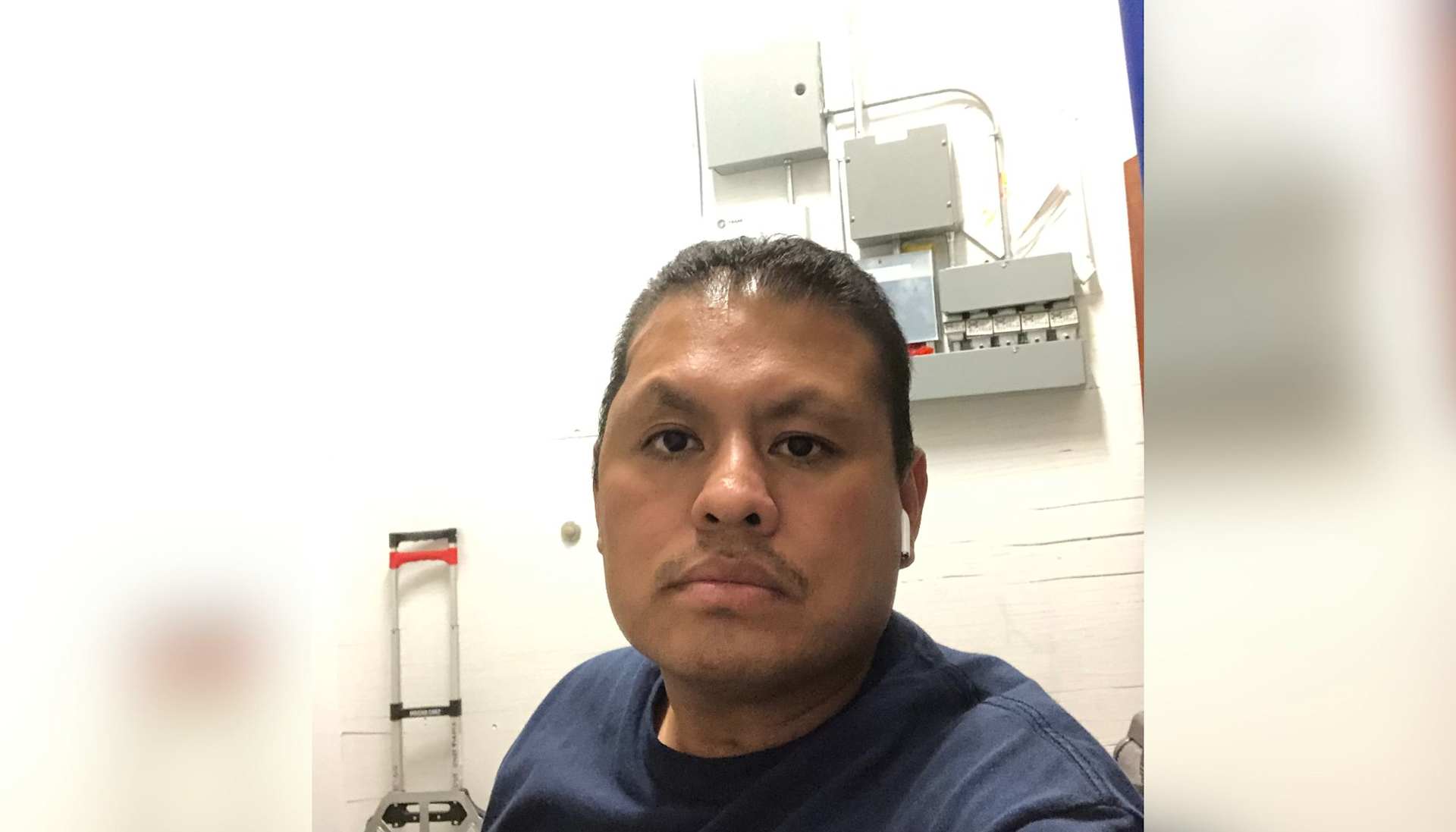
Church employee Francisco Paredes, 46, was handcuffed by ICE Dec. 4, 2025. Eight federal vehicles pulled into a large parking lot adjacent to St. Gabriel’s on 13th Avenue South after Paredes picked up coffee on his way to work, Paredes said, and he was driven to a processing facility.
About 2,000 immigration enforcement agents have come to Minnesota, according to government officials. On Jan. 4, “they were definitely out in front of the church, waiting in front of the church,” Hopkins Mayor Patrick Hanlon said in an interview.
Hanlon said he wants ICE to obey the laws of Hopkins, a community of about 19,000 people known for its lively "Mainstreet" and arts scene, and summertime Raspberry Festival.
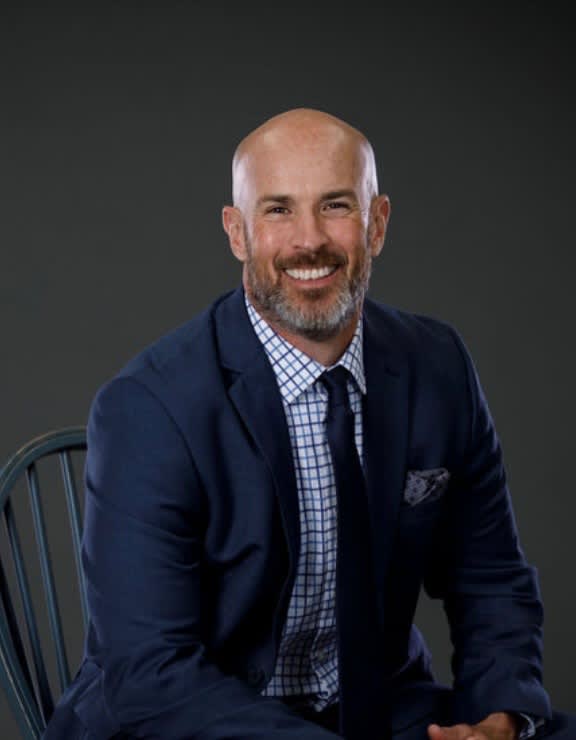
Hanlon made an Instagram reel following the shooting of Good urging ICE to obey Hopkins’ traffic rules and other laws.
(Story continues below)
Archbishop Bernard Hebda in his statement after Good’s death pleaded for “all people of goodwill to join me in prayer for the person who was killed, for their loved ones, and for our community.”
‘Surveilling us’
After observing ICE monitoring the church during Sunday Mass, Haverstock called Hebda and the mayor.
Haverstock told them: “They had out-of-state license plates, and they were just sitting outside our doors for a while.” He added: “They came to our church, and even though they didn’t enter, they were apparently surveilling us.”
Until Paredes’ arrest and before ICE parked outside St. Gabriel’s, more than 400 people had usually attended the Spanish Mass, Haverstock said. Haverstock said he is considering offering a temporary Sunday Mass dispensation in his parish for those who are afraid.
“I think if I don’t give them a dispensation, hardly any of them will be here anyway because of the fear factor. So out of consideration for their circumstances and their souls, I think it’s likely I will give a dispensation for this coming Sunday, but I feel torn because we need God in this situation,” Haverstock said.
‘We’ve united to help our immigrant brothers and sisters’
ICE’s presence has been “a real interference with our parishioners’ right to worship and come to Mass,” Haverstock said.
“They’re also terrorizing anybody of goodwill just by their presence, masks, and idling outside of a church. It’s frightening. I was frightened when I heard that they were there. I was frightened for the safety of the people in the church, including myself, and I was especially frightened for my immigrants,” he said.
Haverstock said he was “really blessed to see that our parish has not split on political lines in this situation, but we’ve united to help our immigrant brothers and sisters.”
‘Too afraid’
Fear is palpable, Haverstock said, with “people being detained, even after showing IDs, and people being harassed, even if they’re here legally.”
When maintenance employee Paredes was deported, “it really got my attention,” Haverstock said.
Paredes, who sang in the church choir and had lived in the U.S. for 25 years with one conviction for driving under the influence, said he spent about a month incarcerated in the ICE detention system before being sent to Mexico. He said he had asked to make a phone call when he was arrested and was denied for several days so his U.S.-citizen daughter didn’t know his whereabouts. Paredes spent Christmas imprisoned and said he had no access to any religious services.

In the Bloomington, Minnesota, immigration office, Paredes, who lacked legal permission to live in the U.S., said he was in a cell with 40 people. There was only one bathroom for the men to share, and “anyone can see when you go to the bathroom,” Paredes said.
After about seven hours later, Paredes said he was transferred to the Crow Wing County Jail in Brainerd, Minnesota. Paredes said a government-financed plane later took him to Laredo, Texas, where he was imprisoned in the Webb County Detention Center.
“They treat people like an animal,” Paredes said. “I was there!”
Paredes said no hot meals were provided, only a sandwich, an orange, crackers, and water. In a large warehouse-like building, “we sleep on the floor. No blanket. They treat you like an animal,” Paredes said.
The Homeland Security spokesperson, meanwhile, told CNA that "any claim there are subprime conditions at ICE detention centers" is "false."
"All detainees are provided with proper meals, medical treatment, showers, blankets, and have opportunities to communicate with their family members and attorneys," the statement said. "The truth is most ICE facilities have higher detention standards than most U.S. prisons that hold actual U.S. citizens. Ensuring the safety, security, and well-being of individuals in our custody is a top priority.”
When President Donald Trump talks about deporting “the worst of the worst,” Paredes said, “he doesn’t have any idea. All the people I met in the prison, they are hardworking people.”
Haverstock said he misses Paredes, who was a “wonderful worker and one of those rare, fully bilingual people, so that was a huge help to have him around.”
“We should be firmly resolved to do our part to obtain justice, not just for ourselves but for our brothers and sisters, and not even just those in the Church, but anyone’s who’s being persecuted, who happens to be our neighbor,” Haverstock said. “Families should not be separated except for extremely grave reasons. And I can say from my personal experience, from what I’ve seen, and from what I’ve heard, that these deportations and this massive push by ICE is not just targeting drug cartels and violent criminals and repeat offenders of major crimes, but it’s targeting moms and dads and families who have committed, in some cases, no crime except entering our country illegally, and separating a family because of that is unjust.”
At the end of Mass, Haverstock invites parishioners to learn how to “help immigrants in the parish who have been negatively impacted by recent events” and join an ad hoc team “to serve our brothers and sisters through works of mercy.”
Haverstock said the parish has used the same petition in the Prayer of the Faithful for several weeks: “For immigrants living in fear, for families that have been separated, and for wise immigration reform in our land, let us pray to the Lord.”
Update: This report was updated on Saturday, Jan. 10, 2026, at 11:30 a.m. with remarks from a Department of Homeland Security spokesperson.