
By David Ramos
Jan 20, 2026 / 15:37 pm
The Cristero War in Mexico, also known as the “Cristiada,” was not only an armed conflict but also a head-on clash between a state seeking forced secularization and a society that refused to renounce its Catholic identity. This bloody episode left a legacy of martyrs and a historical wound that has marked the complex relationship between the church and state in modern Mexico.
Background: The 1917 constitution
The conflict did not erupt overnight. Its roots lie in the 1917 Mexican Constitution, which incorporated anticlerical articles designed to subject the Church to the absolute control of the state.
Article 3 prohibited religious corporations and ministers of religion from operating primary schools. Article 5 banned the establishment of monastic orders and the taking of religious vows. Article 24 limited public worship to the interior of churches, always under government supervision. Article 27 stripped churches of their legal capacity to own property, transferring such property to the nation. Article 130 denied legal personality to churches, barred ministers of religion from participating in politics, and empowered individual states to limit the number of priests. These provisions formed the legal basis for the anticlerical enforcement that culminated in the “Calles Law,” which intensified the restrictions and sparked the Cristero War.
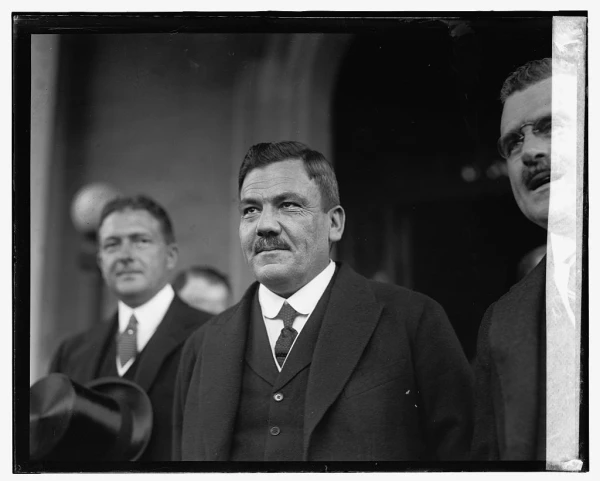
In 1926, President Plutarco Elías Calles escalated the situation with the “Law on Crimes and Offenses Related to Religious Worship and External Discipline,” also known as the “Law of Religious Tolerance” or simply the “Calles Law,” which amended the penal code by establishing severe penalties.
Among its harshest restrictions, the new law prohibited priests from wearing cassocks or any other religious symbols outside of churches, subjecting violators to fines and imprisonment. Priests who were not born in Mexico faced fines and deportation. The establishment of monastic orders or convents was banned, and existing convents were dissolved. Additionally, ministers of religion were forbidden from criticizing the fundamental laws of the country, the authorities in particular, or the government in general.
The Catholic Church’s response was drastic, unprecedented, and disciplined among all the Mexican archbishops and bishops: On July 31, 1926 — with the Holy See rejecting the “Calles Law” and “any act that could signify or be interpreted by the faithful as an acceptance of the law itself” — public worship was suspended throughout Mexico.
The outbreak
“It is indeed the suspension of religious services that may mark the beginning of the Cristero War, states the Franco-Mexican historian Jean Meyer in the opening pages of the first volume of his work “La Cristiada.”
Meyer quotes a letter from some Cristeros to their parish priest, who had been arrested by the authorities and urged the Cristeros to surrender: “Without your permission or command, we threw ourselves into this blessed struggle for our freedom, and without your permission or command, we will continue until we win or die.”
Thus, in different parts of the country, Catholic faithful spontaneously rose up in arms.
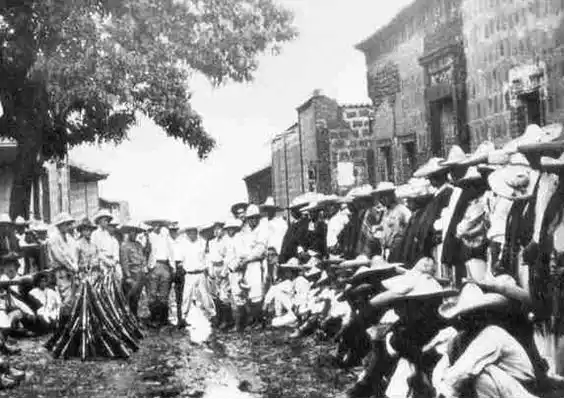
The willingness to engage in armed resistance against the government was not unanimous. “The bishops undoubtedly preached resistance,” Meyer notes, but at the same time, “they specified that they wanted no resistance other than passive and peaceful resistance.”
Although many prelates provided pastoral support to the Cristeros in some way, “the enemies of armed action were more numerous,” he points out.
Nor was the situation uniform among the priests. A list compiled by the Franco-Mexican historian indicates 100 “priests were actively hostile to the Cristeros,” while 40 were “actively favorable to the Cristeros.” Five priests are recorded as “combatants,” while 65 were considered “neutral.”
(Story continues below)
The number of priests “who abandoned rural parishes and priests from cities” totaled 3,500, while the priests “executed by the government” numbered 90.
It was “the people, ‘the Indian,’” who reacted, the historian says, and they did so “violently” because “the Church was more than just a building of piled-up stones, and popular sentiment had been struck to its very core, since the profane and the sacred are inextricably intertwined.”
“The people, the vast majority or many peasants — who were the ones who fought the guerrilla war most fiercely in the states of Jalisco, Guanajuato, Michoacán, Colima, and other central states — didn’t have much theology ... nor did they make many distinctions between things, but rather it was something, let’s say, of the heart and of religious feeling ..., of love for their faith,” that motivated them, the apostolic administrator of the Diocese of Cancún-Chetumal, Bishop Pedro Pablo Elizondo Cárdenas, told ACI Prensa, the Spanish-language sister service of EWTN News.
Some key figures
It is difficult to compile a specific list of the key figures and those who lost their lives at the hands of the anticlerical federal troops, especially considering that the Mexican Bishops’ Conference estimates that there were “more than 200,000 martyrs who gave their lives defending their faith."
But to understand the magnitude of the Cristero War, it is necessary to identify some of the actors who spearheaded the movement, as well as the figures who embodied the spiritual resistance against federal persecution.
The Cristero resistance was coordinated by the National League for the Defense of Religious Liberty — known as “The League" — which, although it managed to secure 2 million signatures in an attempt to reform the 1917 Constitution (an effort that ultimately failed) and organized a relatively successful boycott, threw itself into war effort without being “prepared to face the situation," according to Meyer.
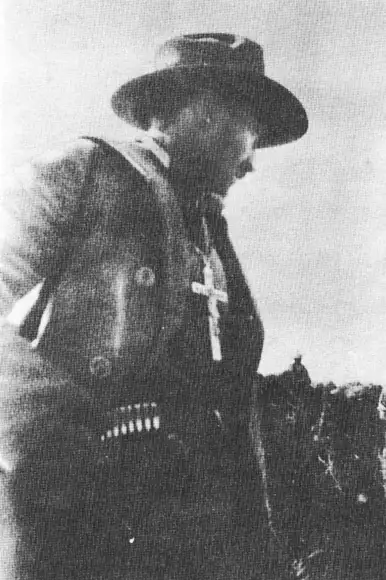
Blessed Anacleto González Flores, known as “Maestro Cleto” and also nicknamed the “Socrates of Guadalajara” in reference to his origin in the state of Jalisco, was a layman who led peaceful efforts to confront the persecution by the government and was martyred on April 1, 1927. He is the patron saint of the Mexican laity.
St. José Sánchez del Río, affectionately called Joselito (“dear little José”), was martyred at the age of 14. He joined the war assuring his mother that “it had never been so easy to gain heaven as now, and I don’t want to miss the opportunity.” He was captured, tortured, and killed. Before dying, he asked that this message be delivered to his parents: “Long live Christ the King, and we will see each other in heaven.”
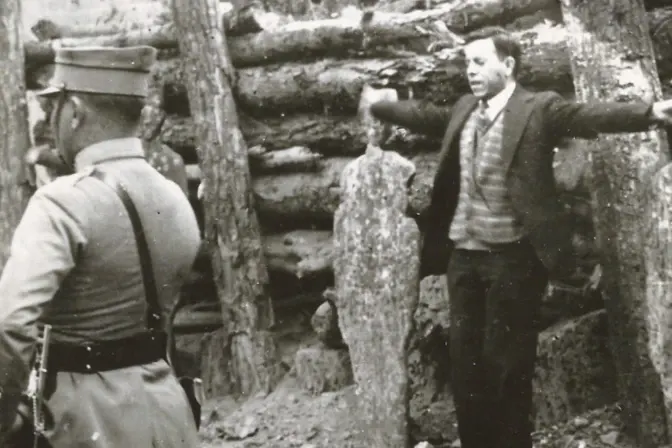
The photograph of the execution of Blessed Father Miguel Agustín Pro on Nov. 23, 1927, shows the Jesuit priest with his arms outstretched in the form of a cross in front of the firing squad. It is one of the most powerful symbols of the brutal religious persecution suffered by Catholics during the first half of the 20th century.
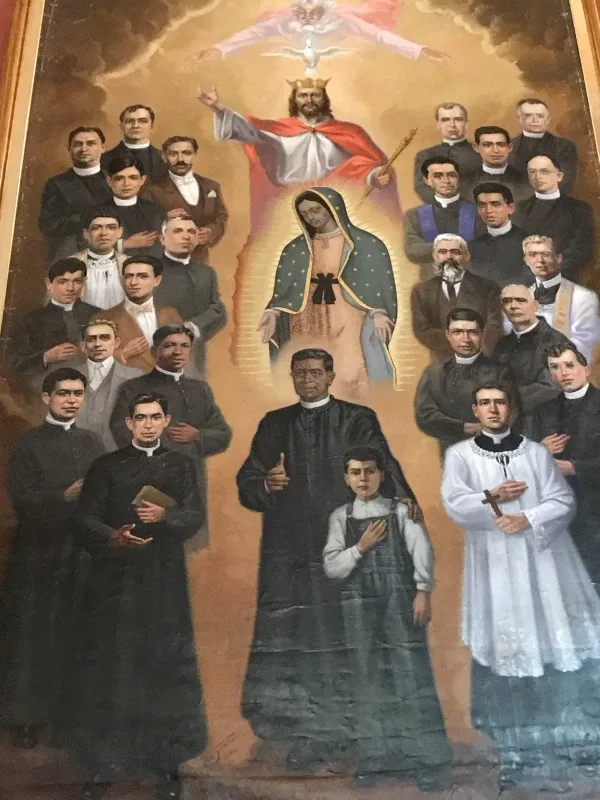
Among those murdered out of hatred for the faith during the religious persecution unleashed by the federal government, six priests who were members of the Knights of Columbus stand out. This fraternity played a leading role, both economically and socially, in supporting religious freedom during that tragic period in Mexico, even to the point of offering their own lives.
The six priests, canonized by Pope John Paul II in 2000, are Luis Bátis Sáinz, José María Robles Hurtado, Mateo Correa Magallanes, Miguel de la Mora de la Mora, Rodrigo Aguilar Alemán, and Pedro de Jesús Maldonado Lucero. All of them were canonized on May 21, 2000, along with 19 other Mexican martyrs, including St. Cristóbal Magallanes.
‘Agreements’ of 1929 and the end of hostilities?
Officially, the Cristero War ended on June 21, 1929, with the so-called “Agreements” between Mexican Archbishop Leopoldo Ruiz y Flores, as apostolic delegate of Pope Pius XI; the bishop of Tabasco, Pascual Díaz; and the then-president of the country, Emilio Portes Gil, successor to Plutarco Elías Calles.
However, the “Agreements” did not entail any changes to the 1917 Constitution or the “Calles Law” but rather established a “modus vivendi” in which the federal government committed to not applying the laws to persecute Catholics, while the bishops resumed religious services and the Cristeros laid down their arms.
But the persecution was far from over. Meyer writes that “for the Cristeros, the ‘modus vivendi’ (a way to peacefully coexist) very quickly became a sinister ‘modus moriendi’ (a way to die), suffered as a trial worse than the war itself and borne like a cross, an incomprehensible mystery which they underwent out of love for the pope and for Jesus Christ the King.”
Meyer notes that “all the former Cristeros say: ‘More people died after the “Agreements” than during the war.’”
“In the capital of the republic, the party line was to assure and repeat that everything was over, but in the records of the Ministry of War, there are reports of campaigns up to 1941 and the generals discussing the means of subduing the rebels, who were sometimes very dangerous, here and there,” Meyer writes in another part of the first volume of “La Cristiada.”
This period is commonly considered the “Second Cristero War,” but Meyer points out that “if the first stage (1926–29) of the Cristero War was already a war [fought by] the poor, the second was a war of the destitute, without resources, without support.”
Long road to religious freedom in Mexico
It would not be until 1992 — after two visits to Mexico by Pope John Paul II, in 1979 and 1990 — that relations between church and state would be formally reestablished in the country with a reformed 1917 Constitution and the new and current “Law on Religious Associations and Public Worship,” which allows for the recognition of the legal personality of the Catholic Church.
Only since 1992 has the Catholic Church been allowed to own churches in Mexico, but all those built before that year — including the Guadalupe Basilica (completed in 1976) — are the property of the nation.
However, current law still prohibits both religious associations and ministers of religion from owning or managing “radio or television stations or any type of telecommunications” as well as “managing any of the mass media.” In fact, the law only permits the publication of “printed materials of a religious nature.”
A call from the Mexican bishops on the centenary
In their most recent message to the faithful, the Mexican bishops called for “honoring the memory” of the “Cristero resistance.”
They warned that this centenary “cannot be a mere nostalgic commemoration. It must be an examination of conscience and a renewed commitment.”
“Our martyrs ask us today: Are we willing to defend our faith with the same radical commitment? Have we lost our sense of the sacred? Have we become complacent in a culture that wants to relegate faith to the private sphere?”
This story was first published by ACI Prensa, the Spanish-language sister service of EWTN News. It has been translated and adapted by EWTN News English.