
Jan 20, 2026 / 16:07 pm
“We have the good news that our culture needs to hear: that men and women are ordered to the good and made for amity for each other. Our embodied, sexed nature has been ordered for our salvation.”
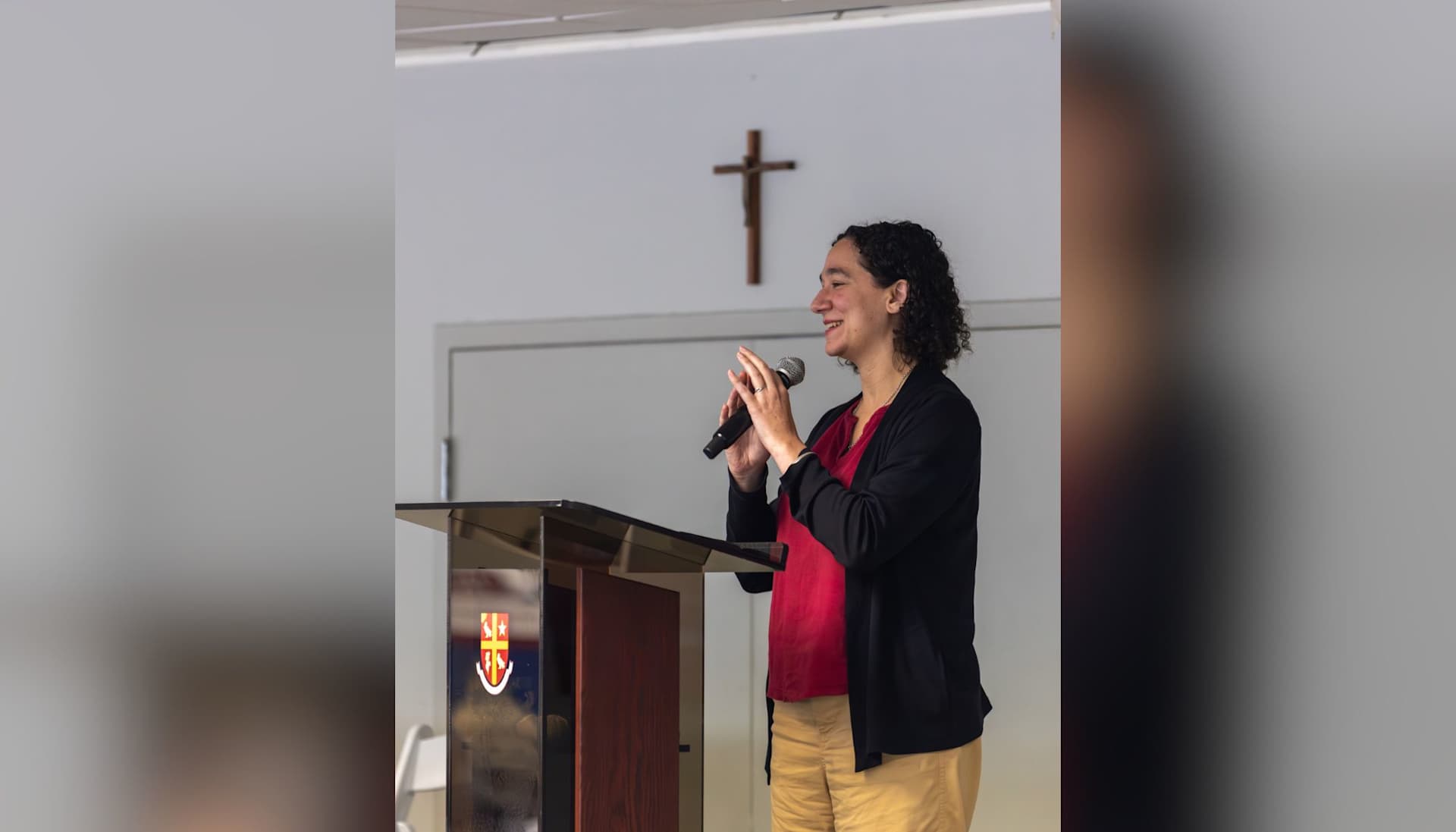
So said Leah Sargeant, a former atheist and author who delivered the final keynote at a recent conference in Houston titled “The Beauty of Truth: Navigating Society Today as a Catholic Woman.”
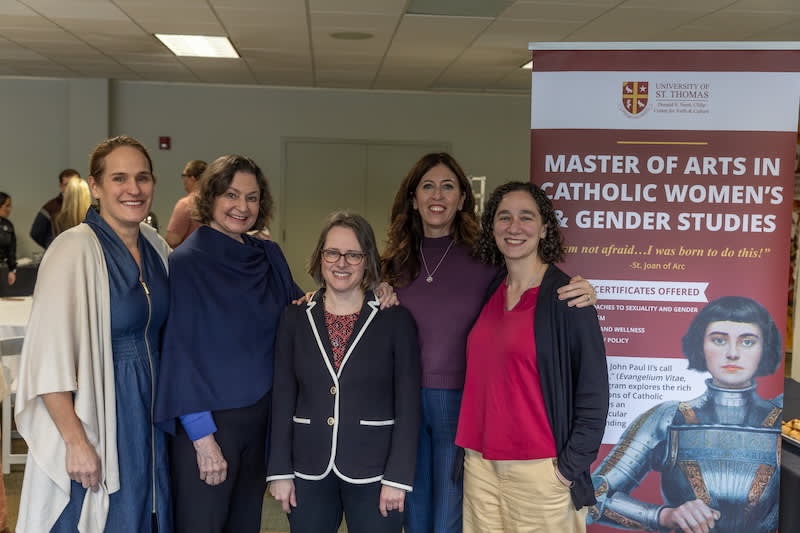
At the conference, sponsored by the Catholic Women’s and Gender Studies program at the University of St. Thomas on Jan. 9–10, Sargeant suggested that our culture’s view of sexuality is premised on two lies. First, that “women’s equality is premised on being interchangeable with men,” and second, that “autonomy is foundational to a fully human life.”
To the first point, she noted that “it’s been common for people who advocate for women to minimize differences [between the sexes].”
Based on this lie, women, she said, are seen as “defective men.”
However, she continued, “the fundamental asymmetry between men and women is how we engender and bear children.”
It is based on this premise that the second lie, that individual autonomy is fundamental to being fully human, gets its strength, she said.
‘Forming a society open to dependency’
Sargeant said that when a woman is pregnant with another human being, the baby’s dependence and fragility does two things: It makes the baby’s life seem less valuable to those who believe autonomy is required to be fully human, and it makes the woman less-than when compared with a man, who never biologically has to enter into such a dependent relationship.
“The idea of having our lives upended by someone else [the baby’s] is a blow to women’s equality. This is the original argument for women’s access to abortion,” she said.
“The right to privacy wasn’t good enough because men always have the opportunity to abandon a child: that only required an act of cowardice. He could walk away, run, leave no forwarding address, and sever the connection. For a woman, she couldn’t divorce herself from her child by failing to step up: It would require outside, active, violent intervention in the form of poison or a scalpel.”
Women had to have what Sargeant called “an equality of vice” with men: namely, abortion. They had to “access to this cowardice as well or they could not be interchangeable with men and would lose political equality.”
Fundamentally, she concluded, both men and women must reject the lies of sameness and the “lie of autonomy” and be “radically dependent on God” and one another to live in the truth.
She quoted St. John Henry Newman, who wrote that “we cannot be our own masters. We are God’s property, by creation, by redemption, by regeneration … Independence was not made for man. It is an unnatural state that may do for a while, but will not do till the end.”
Sargeant reminded her listeners that we should not be afraid to “invite others into our lives or be ashamed to place demands on others.”
“We were always made to need each other,” she said. “We are not betraying ourselves when we expose ourselves as deeply human.”
(Story continues below)
Our task, she said, “is to give people reassurance that this truth is good,” reminding them that “hope doesn’t come from excesses of strength but in the midst of our frailty, and reminds us of how we are loved, and by whom.”
Sargeant's talk at the conference was based on her latest book, "The Dignity of Dependence: A Feminist Manifesto," which was released in October 2025.