
ACI Prensa Staff, Dec 16, 2025 / 15:11 pm
The last major event of the Jubilee of Hope was dedicated to prisoners around the world, some of whom during the past weekend were able to experience freedom and fulfill a dream: to go see Pope Leo XIV.
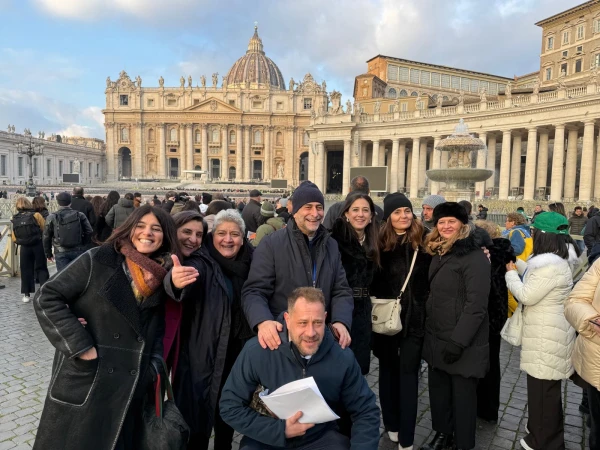
Víctor Aguado, director of prison ministry in Valencia, Spain, accompanied a group of prisoners to the Eternal City, many of whom had spent more than 12 years behind bars. Thanks to special permission, they were able to travel and become living witnesses that “hope breaks down walls and that dignity cannot be taken away.”
In a conversation with ACI Prensa, CNA’s Spanish-language news partner, Aguado recounted the details of the “intense, emotional, and spiritual” trip that will forever mark the lives of the men and women who have been incarcerated.
The group was composed of a total of 13 people from Valencia, including prisoners, volunteers, and the chaplain. Six of them were inmates in the second and third degree of the prison system — regimens that combine incarceration with controlled outings — so they had to obtain a series of permits from the Treatment Board, the General Secretariat, and the Oversight Institutions. “It was a long bureaucratic process, but we didn’t have any problems,” Aguado explained.
He explained that they selected the prisoners they have known for a long time. Those in the third degree of the prison system enjoy a semi-release regimen and live in halfway houses, while those in the second degree usually go to workshops and cooperate with everything the prison ministry proposes. “They are people of faith who attend Mass, and we knew that, given their situation and attitude, they needed this and wouldn’t turn it down,” he commented.
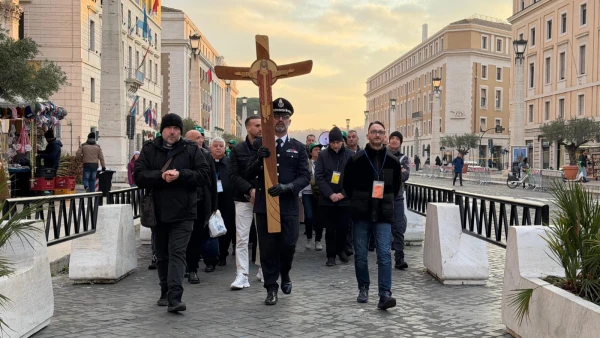
“They wanted to be very well prepared, free of burdens, and participate in Sunday Mass completely cleansed and at peace with themselves,” said Aguado, who also highlighted their passing through the Holy Door as one of the most emotional moments of the jubilee. “With the pilgrimage, the prisoners assumed a new responsibility and a new path, a new life, and the feeling that now they have to do things right.”
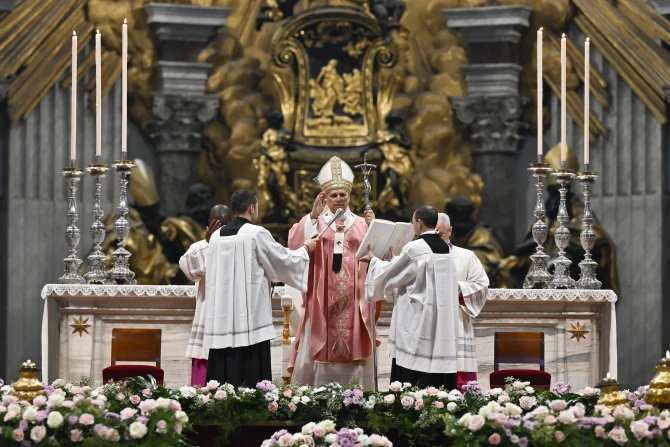
He also highlighted their excitement at seeing the pope, since for them “he is the representation of the Lord on earth.” The Sunday Mass with the Holy Father, Aguado explained, was “very simple, and although it was in Italian, it was perfectly understandable.”
“Hope goes beyond, it breaks down walls wherever it may be, and the dignity of people cannot be taken away, and that is what they conveyed during the three days we were in Rome. These were very intensely personal experiences, and we could feel their joy; everyone had a look of peace,” he noted.
For Aguado — who has been working with prisoners for 14 years — the fact that this event closed the Jubilee of Hope is no mere coincidence. “The world of prisons is not visible, and in some way we must begin to consider that people who have been judged eventually get out and have to reintegrate into normal life, and that depends on society.”
“We know that the Lord forgives everything, so who are we to not forgive these people and keep on stigmatizing them? They are called ex-convicts, but they are nothing more than persons, with all their dignity and freedom,” he affirmed.
Although he assured that the Lord “is always with them and walks with them,” he emphasized the urgency of recognizing the prisoners as living members of the Church and appealed to the responsibility of every Christian: “Sometimes we take the works of mercy for granted, but we don’t always put them into practice. The Lord challenges us: ‘I was in prison,’ and the question remains the same: ‘Did you come to see me?’”
There are many lives that need to be rescued
The Italian priest Father Raffaele Grimaldi, who left his chaplaincy at the Secondigliano prison in Naples — where he served the inmates for 23 years — to coordinate the 230 priests who minister to the nearly 62,000 detainees throughout Italy, also participated in this historic jubilee.
Speaking to ACI Prensa, he noted that the event “is a strong reminder that the Church wants to bring God’s love and mercy to prisons, who goes in search of those who are lost.”
(Story continues below)
According to Grimaldi, this jubilee “has brought to light the most difficult situations we are experiencing in our prisons and the plight of the prisoners” including overcrowding, lack of resources, suicides, neglect, and “above all, the lack of acceptance from society.”
The priest brought some prisoners from different Italian prisons before Pope Leo XIV, especially young people and one man sentenced to life in prison. “It was a moment of great joy for them,” he commented.
“Every prisoner needs to constantly hear a word of mercy: from people who do not judge, who do not point fingers, who do not condemn, but who embrace,” he stated.
He also emphasized that this jubilee has not been an isolated event, since throughout the year there has been spiritual preparation in the correctional facilities, where “proclaiming hope is a powerful message that resonates deeply in the hearts of all.”
Grimaldi admitted that these individuals have “made mistakes” and are serving a sentence for them; however, he urged people to “reach out to them so that they can take up their lives again and change,” with justice accompanied by mercy, “so that justice itself does not become vengeance.”
During his years of service in the prisons, he said he has encountered many people who have traveled on a beautiful spiritual journey, “like a young Albanian man who received the sacrament of baptism on Dec. 12.”
“This makes us understand that in our prisons there are many lives that need to be rescued and helped, because if these opportunities don’t exist, the prisoner dies inside, and we also kill the hope that is in their heart.”
This story was first published by ACI Prensa, CNA’s Spanish-language news partner. It has been translated and adapted by CNA.