

ACI Prensa Staff, Dec 23, 2025 / 16:25 pm
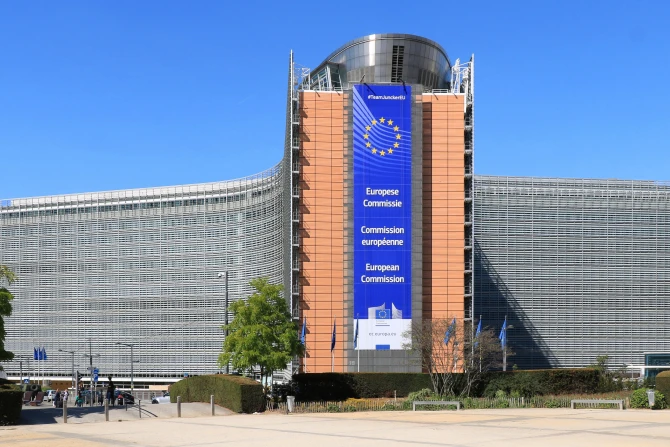
The European Commission has decided to withdraw funding from the Federation of Catholic Family Associations in Europe (FAFCE), an organization founded in 1997 to promote and defend the family, based on marriage between a man and a woman, before European institutions.
The decision comes at a time when the European Union has recently given the green light to initiatives that promote so-called abortion tourism financed by European funds and the imposition of the recognition of homosexual unions on all member states.
In contrast, funding is being denied to this Brussels-based Catholic federation, which brings together 33 associations from 20 European countries and is currently active with EU institutions, the Council of Europe, and the U.N.
At the end of November, the EU froze the funds allocated to projects submitted by FAFCE without providing an explanation, even though several of them were aimed at protecting minors from pornography or promoting digital security, areas that the union itself considers priorities.
The president of FAFCE, Vincenzo Bassi, said the European Union’s rejection is based on the federation’s alleged shortcomings related to its approach to gender and equality, criteria promoted by the EU itself.
In a statement to ACI Prensa, CNA’s Spanish-language news partner, Bassi noted that his organization is subject to systematic discrimination, since it seems that “the family experience is not compatible with the values of the European Union.”
This rejection, Bassi emphasized, “is not due to technical issues but to an explicit ideological prejudice,” because the European Union does not conceive of the family “as a relevant social actor.”
Furthermore, he warned of a broader process of ideological imposition and encroachment on sovereign nations’ own laws in areas such as abortion, family, and identity. The EU’s objective, he explained, is to “transform policy decisions into legal decisions in order to impose them on member states.”
As the FAFCE president explained, through so-called soft law — nonbinding resolutions that create legal consensus — the EU is encroaching on sovereign nations’ own laws that the treaties reserve exclusively for the states, especially in matters such as family or abortion. This would allow, for example, pressure to be exerted on countries with more restrictive legislation, alleging violations of the “rule of law.”
Bassi said this shift represents an abandonment of the original spirit of the EU’s founding fathers, who “envisioned European integration based on social cohesion and the strengthening of families.”
Instead, the Italian leader criticized that today a “bureaucratic model” prevails, one that “wants to teach my grandmother how to cook pasta” instead of providing the means for a better life.
Despite the seriousness of the financial situation — since, as he pointed out “without the Catholic community, we run the risk of not being able to continue” — Bassi remains optimistic. He said he believes that Europe’s demographic winter and internal contradictions are creating a favorable environment “for a serious debate about the family.” His goal, he noted, is not to confront the European Union but to propose an alternative truly emerging from the people, faithful to Europe’s roots and vocation.
This story was first published by ACI Prensa, CNA’s Spanish-language news partner. It has been translated and adapted by CNA.